Sugarcane growers are being urged to plan ahead as the industry works through reducing the reliance on paraquat for knockdown control.
Sugar Research Australia (SRA) is continuing to help sugarcane growers prepare for a future with limited or no access to paraquat. SRA is actively collaborating with chemical companies to identify, develop and progress alternative herbicide knockdown strategies.
Promising options will be considered for potential registration by the Australian Pesticides and Veterinary Medicines Authority (APVMA), helping broaden the range of tools available to growers and support effective weed management into the future.
Early trial work conducted by Weed Science Leader, Emilie Fillols, is showing that alternative strategies to paraquat will not be a simple product substitution. Instead, it will require growers to learn how to safely incorporate the alternatives into a new weed management program to optimise weed control and minimise the impact on the crop.
Ms Fillols is leading the SRA-funded project Paraquat alternatives – Re-develop Integrated Weed Management in Australian Sugarcane without Paraquat, to identify effective, affordable and crop-safe strategies for knockdown grass control.
“This work is focused on early post-emergent control of key grass weeds such as itch grass, Guinea grass, crowsfoot, summer grass, wild sorghum and Johnson grass, which are currently managed with paraquat,” Ms Fillols said.
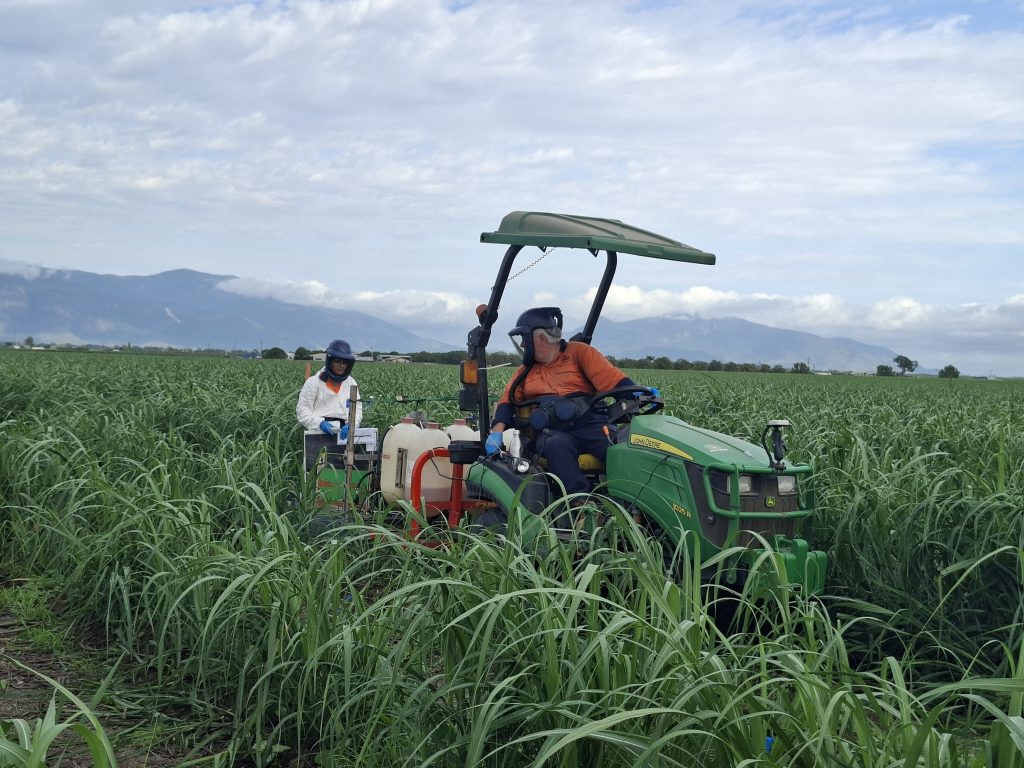
To date, nine greenhouse pot trials have screened 11 registered herbicides and mixtures and five new (unregistered) active ingredients, supplied by chemical companies, to assess their knockdown efficacy and safety on sugarcane crops. Initial results have indicated that four of the five unregistered compounds have “very good” control on some of the tested grasses. Similarly, some of the existing registered actives have also shown very good efficacies, on some of the tested grasses.
“All treatments will now be screened in field trials, to assess their impact on cane yield,” Ms Fillols said. “Results will be shared with manufacturers to assist with potential future product registration, and to support the integration of any new active into a revised weed management program, that will be developed for industry.”
Until new recommendations are available, growers are advised to use only registered products as directed, and seek advice from their local productivity service, agronomist or reseller before changing programs.
While chemical manufacturers, SRA and industry partners are busy developing alternative strategies to paraquat, and exploring potential pathways to seek limited use permits of paraquat in sugarcane in the future, growers can find current weed management alternatives without paraquat here: Guidelines: Without Paraquat – August 2026 – Sugar Research Australia
Industry will continue to be updated on the results from Ms Fillols’ trials, via SRA’s various communication channels. Once effective and affordable alternative control methods are identified, workshops will be held across all major sugarcane growing regions to communicate the new integrated weed management guidelines, including spray application rates and timings.
Emergency use permit sought
While alternative strategies to paraquat are being explored, SRA continues to provide technical advice and support to industry partners seeking an emergency use permit that would allow growers to retain some access to paraquat in sugarcane, with appropriate safeguards in place.
The APVMA’s recent ruling on paraquat use removed sugarcane from revised paraquat labels because the allowable application rates were well below those required for effective use in cane.
Products with labels approved before the APVMA decision can continue to be used until 22 June 2028. However, growers are limited to the finite supply of old-label stock available.