Here is an update on research projects underway throughout the industry.
Weeds
SRA is currently funding a project seeking to find alternative herbicides to paraquat (Project: 2025002). Currently, four product efficacy trials are under way (ten already completed on five key grass species at various growth stages – Guinea grass, Summer grass, Barnyard grass, Wild sorghum, Itch grass, and Crowsfoot).
Three crop safety trials are also underway testing new herbicidal actives in the Burdekin and Meringa for the 2026-27 season, in plant cane. Initial data shows that some of the new tested herbicidal actives present crop safety issues when directly sprayed on most varieties at the 7-8 leaf stage while other actives are showing a high level of selectivity. An additional pot trial focusing on determining a crop stage for safe application of some of the most phytotoxic actives is underway. Three crop safety trials in ratoons have been implemented in the Burdekin and Far North to better understand crop tolerance to glufosinate, isoxaflutole and hexazinone when directly sprayed at the base of the cane in ratoons (less than 0.2 m stalk).
Every year the Weed Science group collaborates with the Variety Development team in screening new varieties for herbicide tolerance. The most recent set of data is being analysed and will be made available through regional variety guides.
Factsheets on milkweed control have been prepared and are available on the SRA website.
Pests
Twelve field trials are planned for the second season of examining the efficacy of chemical treatments for the control of canegrubs in the SRA priority project, Beyond imidacloprid – Ensuring effective and sustainable management of canegrubs into the future (Project 2025001). At this stage, five of these sites have had treatments applied and the other seven will be treated in October/November.
Diseases
In the RSD at the mill project (Project 2022007) the algorithm for Tully Mill is performing well with only 23 of the 936 molecular samples not matching with the NIR prediction. An additional probe and new primers have been designed and are being tested for RSD mill juice detection. Nearly 1000 qPCRs have been processed.
The SRA soil pathogen laboratory processed and reported on 33 Pachymetra soil analyses during August. This information is critical in terms of choosing which varieties to plant on farm in order to limit the impact of Pachymetra on productivity.
Agronomy
Practice change projects
With the Southern Wet Tropics Agronomy Project (Project 2023801) in the Herbert region, SRA agronomists have identified that potential yield constraints associated with interacting soil, groundwater and environmental conditions may be affecting multiple farms in the region. The team is drafting a program of works to address opportunities to improve profitability and productivity for growers involved in the project. The project is part of the Sugarcane Practice Change Program funded through the Queensland Government’s $330.5 million Queensland Reef and Catchment Water Quality Program.
Silicon project
The project Are trends in silicon uptake a reason for concern? (Project 2024018) is investigating to what extent silicon uptake and availability is limiting productivity, particularly in the FNQ regions. Crop biomass and sampling of the project sites have been completed and soil sample collection will commence as the sites are harvested. These datasets are critical for determining future research activities within the project.
Sunn hemp
The Queensland Department of Primary Industries (DPI) is currently developing a case study to showcase the use of Sunn hemp as a green manure crop in the cane industry. The case study is based on the paper developed by SRA and DPI and presented this year in Mackay at the ASSCT Conference. This follows the project funded by DPI and SRA.
MicroNIR
The handheld MicroNIR has been used in the mill by-product project (Project 2024014) to look at treatment impacts on CCS prior to harvest at an Innisfail and three Mulgrave sites. Regular sampling occurred at these sites prior to harvest and is providing an indication of the change in CCS over time in the different mill by-product and nitrogen rate treatments.
Long-term soil health trials
This project (Project 2024010) is looking at minor modifications to the way trash is managed in order to improve soil health. A new trial site was planted in the Mackay region in early September. Trash treatments will be imposed at the project trial sites following harvest. Some of the treatments include the addition of nutrients to trash, light tillage, and baling.
Other news
Fusarium Wilt
Please join Manager Biosecurity & Disease screening, Dr Shamsul Bhuiyan, General Manager, Research & Development Dr Tinashe Chiurugwi and District Central Manager Dylan Wedel online on Tuesday 13 October from 11-11.30am in a webinar to discuss the new project looking at Fusarium wilt.
REGISTER here: https://sugarresearch.com.au/upcoming_events/sra-webinar-fusarium-wilt-australian-industry-update/
Emerging productivity constraints
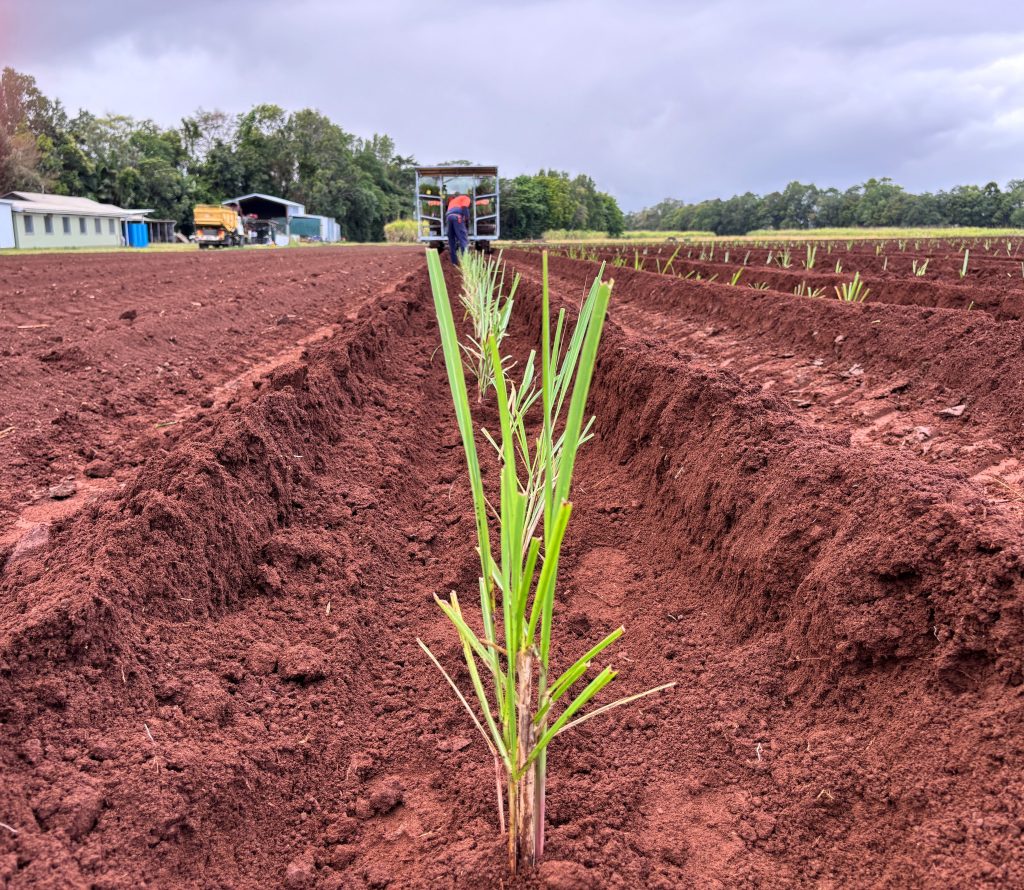
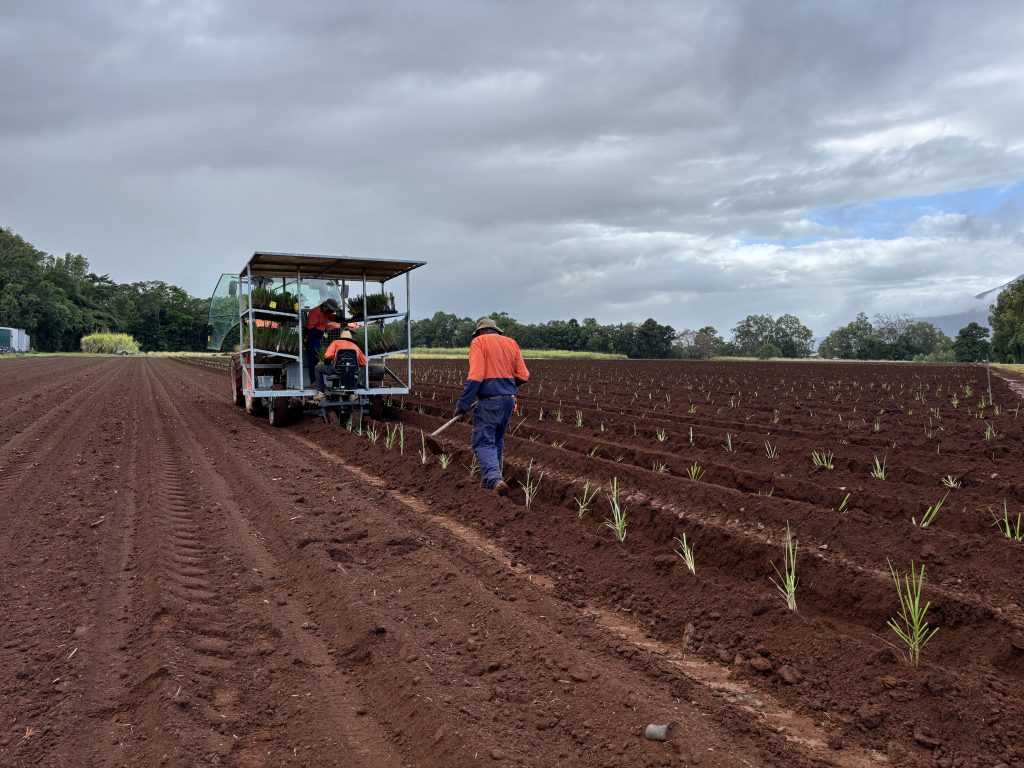
Winter rainfall has greatly delayed planting operations across the FNQ and Herbert cane growing districts, resulting in a higher percentage of late plant. In addition, the continual rainfall and reduced solar radiation is also impacting developing ratoon crops. On the other hand, conditions in the Central region are extremely dry affecting young establishing crops. These conditions will impact the 2027 crop in these regions.
Positive changes
Researchers from TropWater JCU, CSIRO and the Queensland Department of the Environment, Tourism, Science and Innovation (DETSI) have recently published two journal papers reporting that changes in nitrogen and phosphorus management are having a positive impact on water quality without reducing sugarcane yields.
Please feel free to contact me with any questions about these projects.
(Dr) Tinashe Chiurugwi
General Manager Research & Development Email: tchiurugwi@sugarresearch.com.au Telephone: 0475 042 284
Our 2026/27 progress will be measured against the goals set out in SRA’s Strategic Plan 2026–2031. We are managing and delivering R&D through a disciplined stage-gate model. Projects will move from early evaluation to experimental testing, pre-commercial assessment, commercial deployment and adoption only where evidence supports continued investment.

(21 October 2026)