By Garry Rosewarne, General Manager Variety Development
Here is the Variety Development Team’s update for September.
Genomics
The Meringa crossing team completed the season with 876 crosses. Crossing transfers pollen between plants to combine desirable traits, such as yield and disease resistance, in new hybrid offspring.
Phenotyping
SRA is increasing drone use for phenotyping — measuring, analysing and recording crop performance and growth. Twenty-two flights were completed in August, bringing the yearly total to 34.
Field operations
North and Central field operations are under pressure from expected early mill closures due to lower yields, with wet weather delaying trial harvesting and planting.
Interstation exchanges are complete for the year, helping fast-track improved sugarcane varieties across production regions.
A new statistical analysis is combining trial data from 20 sites over the past 5 years and has identified clones that show universal promise across all regions. To further improve this analysis, future trials will have 30 common clones across all sites. Clones are cold-soak hot-water treated before transfer to pots at SRA’s quarantine site at the Department of Primary Industries’ Redlands facility.
Promising germplasm moves between SRA regional research stations so new varieties enter local field trials earlier and are tested across Queensland and northern New South Wales climates, soils and disease pressures.
The program will identify strong universal performers for multi-region releases, similar to what has occurred with Q208 and SRA32.
- In New South Wales, two-year crops are assessed through Advanced Assessment Trials (AAT), and Final Assessment Trials (FATs) are being planted.
- In the Southern region, interstation exchange clones are being cut and germinated, harvest and FAT planting are underway, FAT propagations are being prepared for next year’s seed, some CATs await planting, and tentative clones await further disease and yield data before CAT trials.
- Central is planting FATs and propagations while prioritising harvests due to likely early mill closure. All trials will be planted on time.
- Burdekin has completed planting and harvesting.
- In the Herbert, three FATs have been planted, with one remaining, and data collection is complete ahead of propagation trial planting.
- The North is planting FATs and harvesting CATs, with weather delays. Harvesting has been prioritised, but all trials are expected to be planted
Collaboration with productivity services companies
Earlier in the year, the RVCs variously voted to have a total of 22 clones enter the accelerate stage. Several productivity boards receive cane and start initial bulkups at this stage and we look forward to seeing how these potential varieties perform in a variety of environments.
This release process includes:
- Final Assessment Trial (FAT)
- Final Assessment Trial Repeat Entry (FAT R) – for more promising clones
- Accelerate – where productivity boards share further yield, CCS and performance information with SRA before release
- MaxProp – productivity boards begin to bulk up supplies prior to their release.
So 22 clones are in the Accelerate stage. The most promising clones are assessed by Regional Variety Committees before progressing to MaxProp.
Genetic modification
With secretariate support from CANEGROWERS, we are commencing a due diligence process to assess the value of developing GM cane for Australia. This process will cover export market and domestic acceptance, regulation, intellectual property, freedom-to-operate, delivery options, processing implications, social licence and grower acceptance.
Industry value propositions will be developed for glyphosate tolerance, top borer tolerance and stem borer tolerance in the first instance as these are the traits that are already available. These genetically modified traits have been deployed in Brazil, although development of in Australian markets was stalled due to market non-acceptance. It is timely to revisit this opportunity.
A platform has been established to discuss options with mills and gauge their response. Two CANEGROWERS meetings were held in August and September, and industry consultation is ongoing.
Train the Trainer
The first Train the Trainer session was held in Mackay in September. Requested by productivity services companies, it is a priority under SRA’s District Impact Plans.
The two-way session introduced productivity service staff to the new Multi Environment Trial (MET) statistical analysis, which evaluates crop genotype performance across locations and years to measure yield stability and Genotype-by-Environment Interaction (GEI).
The session also gathered feedback on newer varieties up to seven years after release, including fit with agronomic practices and farming systems.
Seedling Selection Day
If you are in Mackay on Wednesday 14 October, visit Mackay Station for Seedling Selection Day (from 9am). Contact Dylan Wedel, District Manager Central, for more information on dwedel@sugarresearch.com.au
Our 2026/27 progress will be measured against four Variety Development goals in SRA’s Strategic Plan 2026–2031:
- Implement genomic-based breeding
- Improve phenotyping through remote sensing and AI
- Optimise trials for commercial performance
- Assess genetic modification potential through due diligence
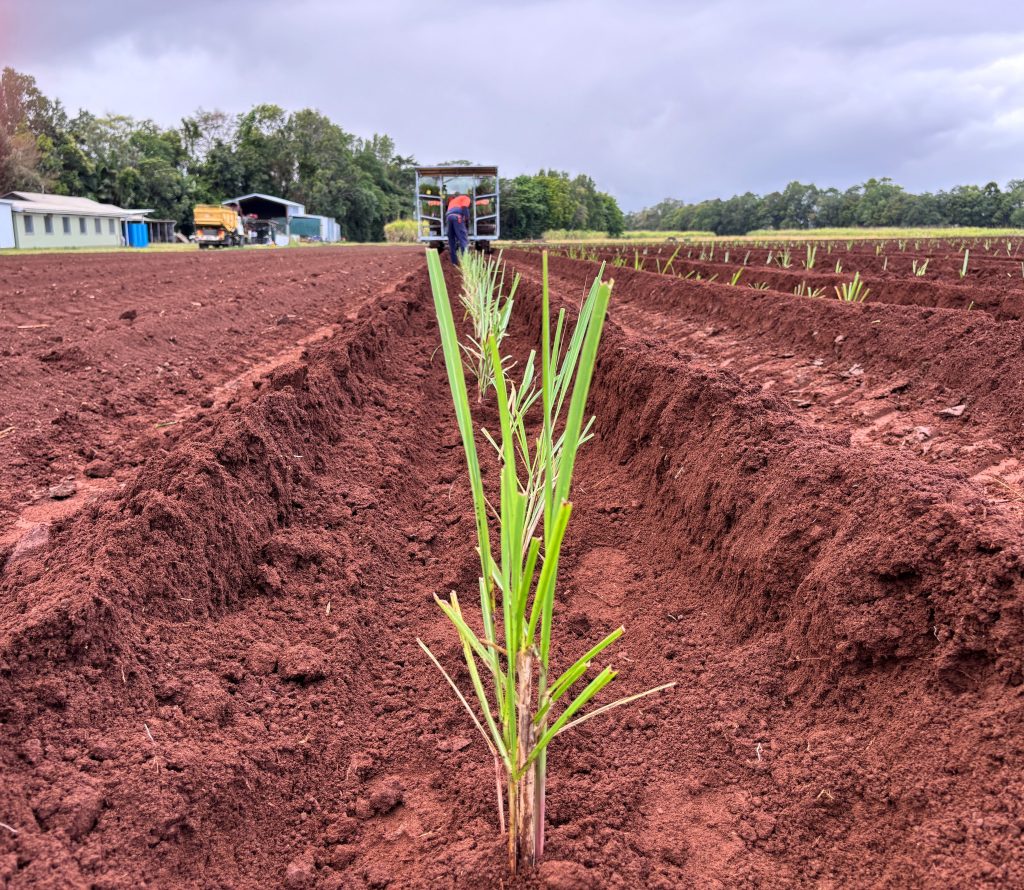
(Above): Planting at SRA Meringa