Australian sugar mills produce more than two million tonnes of mill mud every year. Sugarcane growers use it as an important soil conditioner; however, disposal of the remaining mill mud is a problem as it can smell, take a long time to break down, and lose nutrients such as phosphorus into waterways.
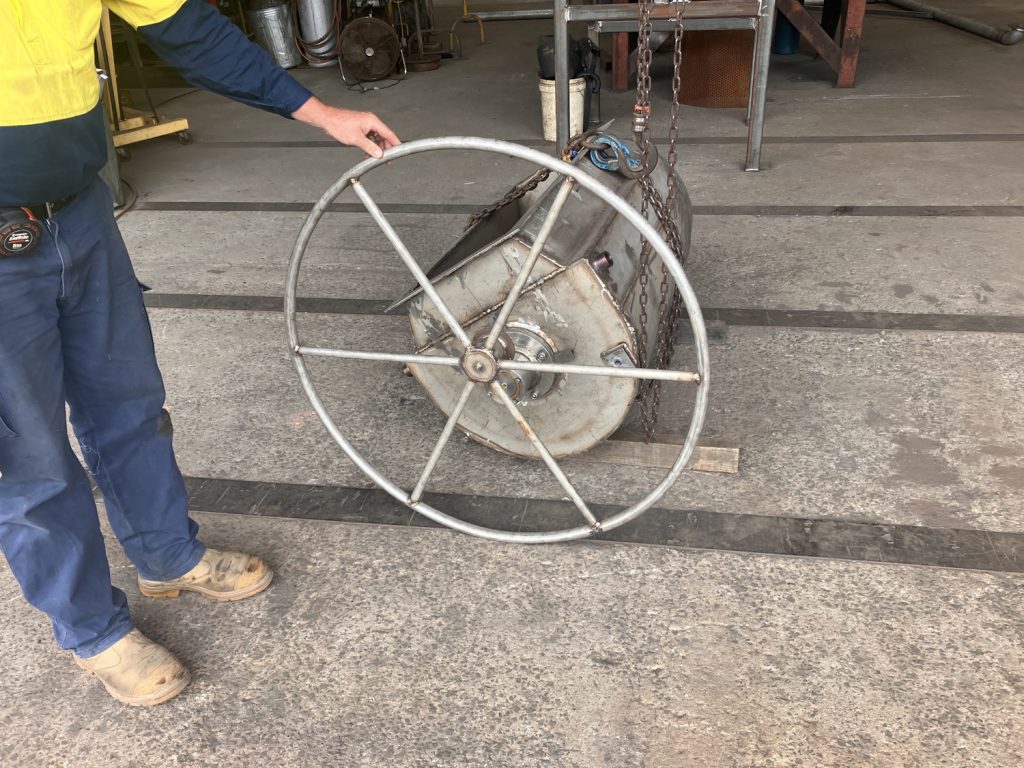
A new project led by Chief Investigator, Professor Stephen Xu at Charles Darwin University, has found a machine that removes odours, kills pathogens, and turns mill mud into a cleaner, safer product for use in fertilisers, potting mixes, planting bags, or soil blends. The thermo‑digester, a small machine that uses heat and microbes to break down mill mud in about 24 hours, has proven to be highly valuable for both growers and the gardening sector.
How it works (in simple terms)
- Mill mud is mixed 50:50 with bagasse
- The mix is heated to 60–80 °C using steam or hot water from the mill
- Special microbes speed up the breakdown overnight
- The finished product is cooled and emptied from the digester the next day.
- The system is fully enclosed, automated, and designed to fit into normal mill routines.
What the trials showed
- The process ran reliably overnight
- Moisture dropped from about 75% to 50–60%
- No strong smells developed during or after processing
- Harmful microbes were almost completely eliminated
- The final product had a good structure and was easy to handle.
Different microbial products used in the trials gave slightly different nutrient results, meaning mills can adjust the “recipe” depending on what product growers, gardeners or other buyers want.
A curing process of 1-2 weeks, achieved during the packaging, transport and storage stages, completes the thorough decomposition of the mill mud/bagasse mixture, resulting in a mature product.
What the final product is like
- Light, crumbly, and odour‑free
- Easier to spread or blend than raw mill mud
- Suitable for:
- Potting mixes
- Planting bags
- Soil conditioners
- Custom organic fertilisers.
(Note: phosphorus is not removed, so blending may still be needed)
- Less odour and fewer complaints
- Better control of nutrients
- Turns mill mud into valuable products – for growers and for the gardening sector
- Potential to supply growing media locally
- Supports recycling and circular economy goals.
What’s next?
The next step is scaling up: running the system regularly during the crushing season, producing more product for paddock trials, and testing it at multiple mills.
Acknowledgements
Funding & Management – Sugar Research Australia
Industry partners – Isis Central Sugar Mill personnel
Research support – Southern Cross University – Environmental Analysis laboratory for chemical and biological analyses
Macquarie University – Australian Proteome Analysis Facility for carbohydrate analysis
Technical support – Jabiru Agribusiness – for digester design expertise, microbial product selection and thermophilic digestion guidance – and ISAS Controls – for controller design programming and technical integration.