On-farm evaluation of new management practices
On-farm trials and evaluations are an important tool in the nutrient management toolbox.
- Allow a grower to compare new practices, products or rates under the circumstances and conditions in which they farm
- Valuable and preferred method for fine tuning nutrient management practices
- Positive outcomes from on-farm trials help build confidence in a new practice
- They should be used if a grower is unsure whether a practice will work on their farm, if they are unfamiliar with a new practice or product, or if there is concern that a practice may have a negative outcome (productivity or profitability).
When implementing an on-farm trial it is important to consider the following points:
- Seek advice on design and implementation from a trusted advisor prior to commencing any trial and again when interpreting results
- Ensure the mill and harvesting contractor are aware of the trial
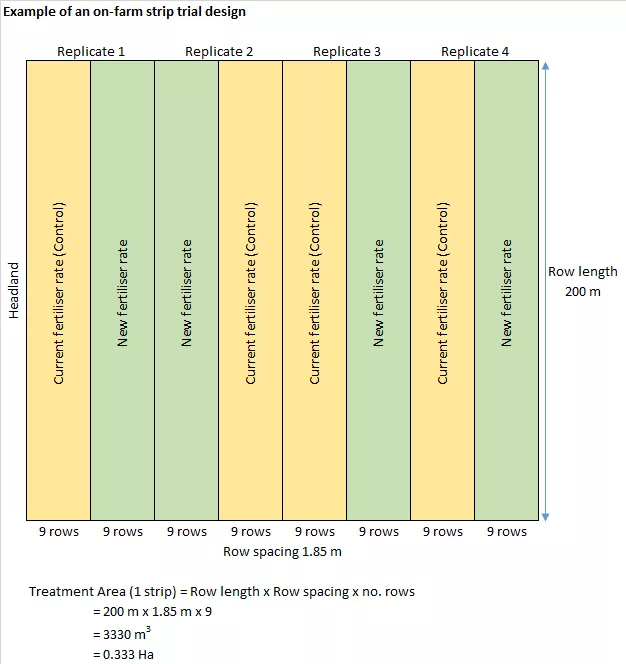
- Mills can provide information on how much cane is required in a rake (often 30-40 t) to receive a separate CCS analysis. This affects the area required in any treatment (row length, number of rows, likely yield)
- Keep it simple – only change one practice at a time and compare it to your current practice (control) – new product applied/no product applied (control) or new nutrient rate/ current nutrient rate (control)
- If testing lower nutrient rates, start by making small adjustments (~10% reduction)
- Variety, crop class and all other management practices should be the same across the whole trial area
- Soil type should be as uniform as possible, EM mapping will assist in site selection
- Variable blocks may require more complex trial designs. Consult an experienced advisor
- Ensure there are replicates of each treatment (three or four separate sections of a block receive the same treatment). Subtle changes in soils, moisture content, irrigation efficiency, weed and pest pressure can cause yields to vary across a block. Replicates help reduce the effect of these factors on trial results
- Avoid simply dividing a block into two and treating each half differently, or comparing two separate blocks
- Keep a record of factors likely to have affected the results (rainfall, irrigation, other)
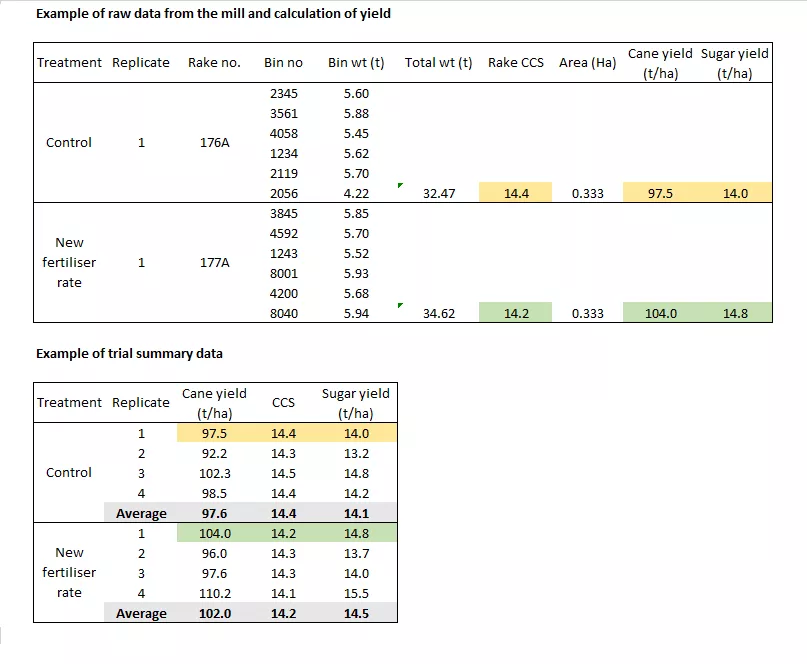
- At harvest, consign the areas that received different treatments separately
- Compare cane yield, CCS and sugar yield to identify whether there was any change in production due to the new practice
- A simple gross margin assessment will assist in determining whether a new practice had an economic benefit. A simple gross margin calculator has been included below.