Now that the harvesting season is in full swing, SRA’s variety breeding teams have been busy with trial work across all regions.
It’s been a very busy time at the Meringa Station, with SRA’s all important cross pollination of sugarcane varieties well underway.
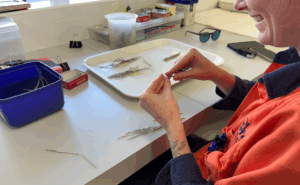
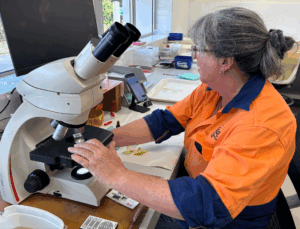
(Above): It’s not as simple as placing male and female sugarcane flowers together and hoping they reproduce. A lot of careful work in the laboratory is needed to ensure successful cross-pollination of the best traits from each parent to form a genetically unique clone with great sugar, tonnage and the right amount of fibre.
The Plant Breeding Team has been inspecting parent plants, choosing the male and female flowers from select parents with good traits. These couples are arranged together in SRA’s crossing paddock (or ‘the honeymoon suite’) in a fabric hanging lantern for controlled pollination. About 20 lanterns are hanging at the moment. Read more detail about this process on page 14-15 of Cane Matters, Summer 2024/2025 here.
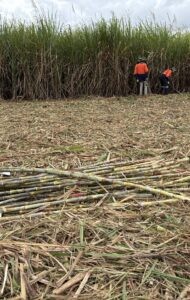
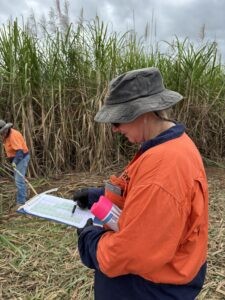
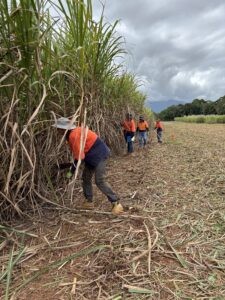
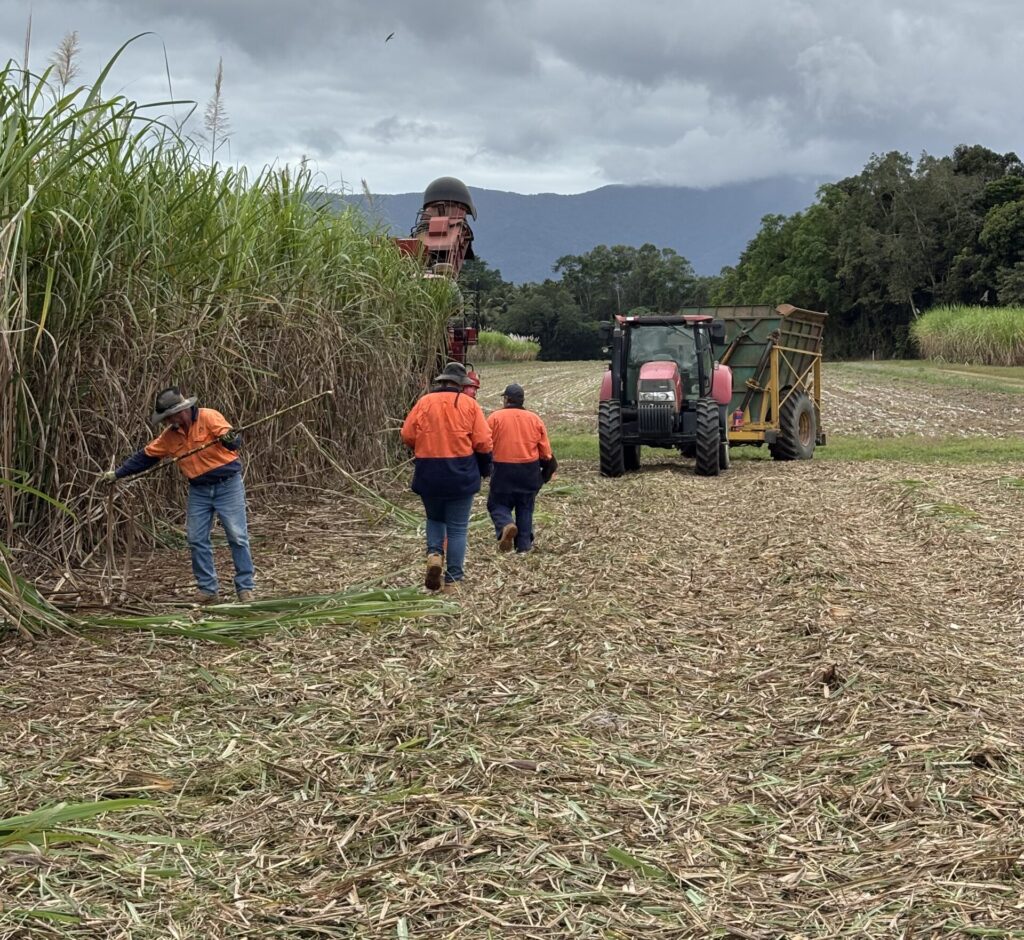
(Above): The Plant Breeding Team is working on a Progeny Assessment Trial (PAT) site at Meringa.
The PAT is the first stage of the selection program where all sugarcane genotypes start their 12-year journey towards possible commercial release. Read more detail about this process on page 22 of Cane Matters, Autumn 2025 here.
Each sugarcane seedling germinated at Meringa is a genetically unique individual, and is grown in a family plot with its siblings in the first assessment trial.
The PATS are grown for 12 months and harvested at maturity to assess each family’s commercial potential for cane yield (tonnes cane per hectare – TCH) sugar content (Commercial Cane Sugar – CCS) and fibre content (% fibre).
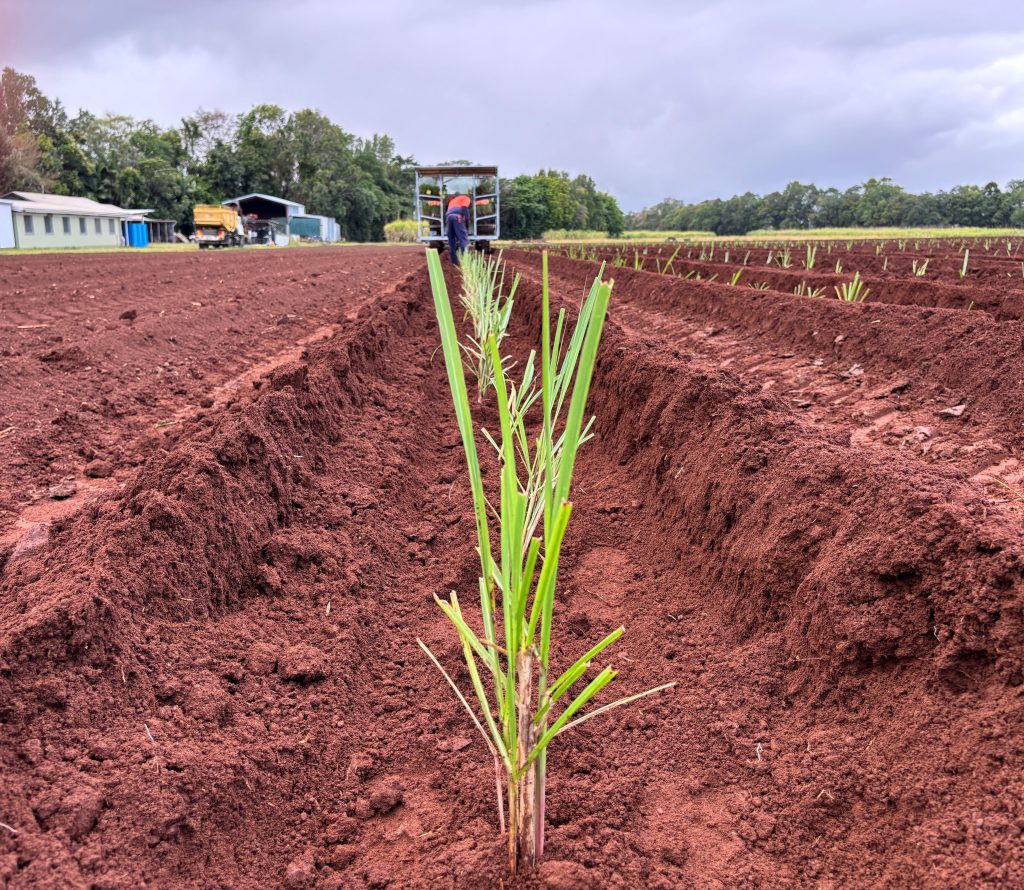
Meanwhile, this week in the Central District, at SRA Mackay, the Plant Breeding Team is focussed on preparing for and planting the first Final Assessment Trial (FAT) of the 2025 season.
Testing is intense at the FAT stage. Elite clones must pass the test on producing large tonnes of cane, lots of sugar, not too much fibre, good visual appearance (only as it affects performance) AND their ability to grow a good ratoon crop year after year.
They also have to pass rigorous tests on disease resistance and milling quality.
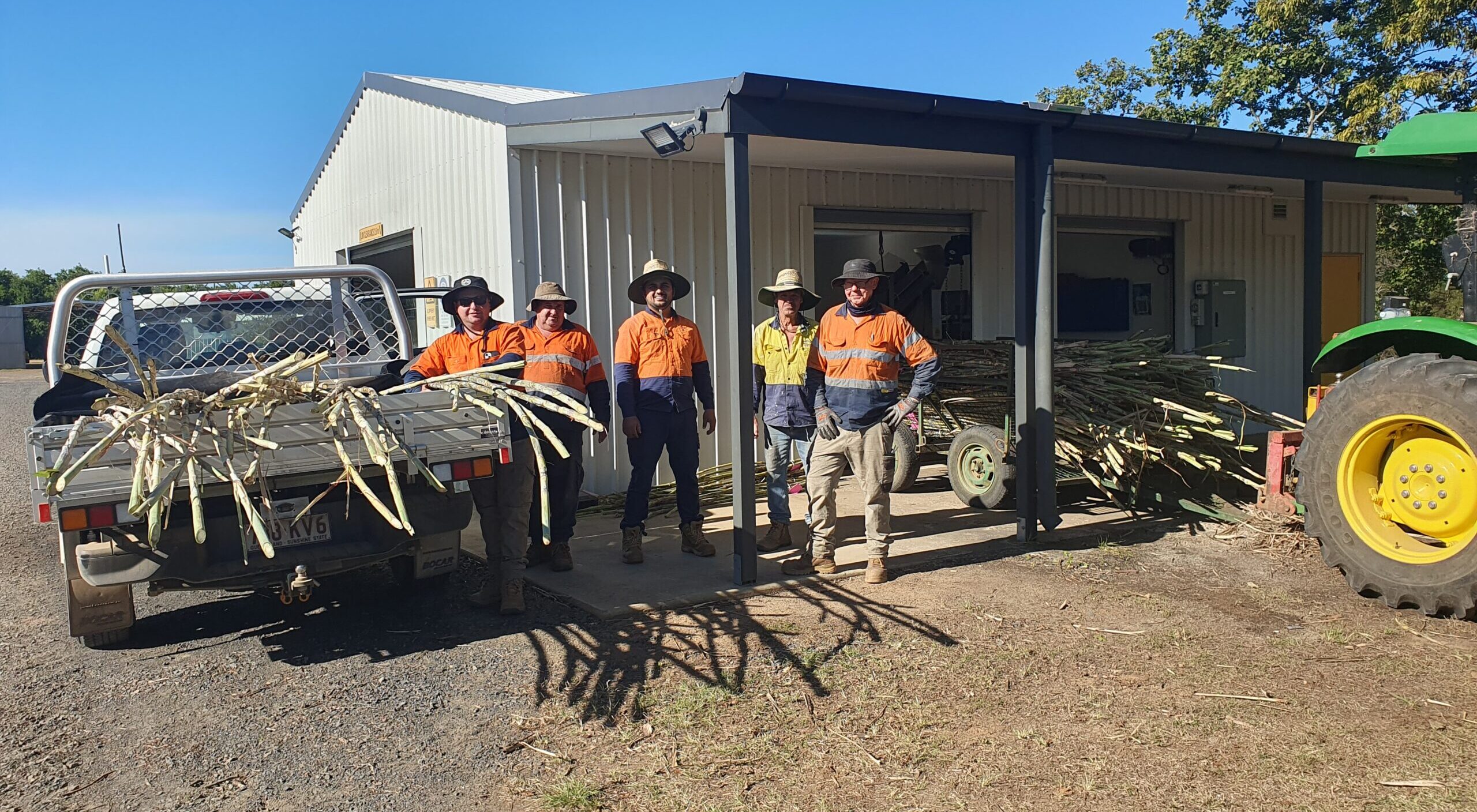 (Above): The Plant Breeding Team at Bundaberg is off-loading observation trial samples at the SpectraCane lab.
South to Bundaberg station and 220 Clonal Assessment Trial (CAT) (stage-2 trial) pre-samples have been collected to process through the SpectraCane laboratory. SpectraCane is a unit that analyses a cane sample using near infrared (NIR) spectroscopy technology to estimate CCS and fibre content.
Samples from trials can be collected for analysis at the time of harvesting or prior to harvesting (pre-sampling), where the trials are not lodged. Harvesting trials that have been pre-sampled is faster as only plot weights remain to be collected. It is also safer since there need be no crew on the ground collecting samples at the same time as harvesting.
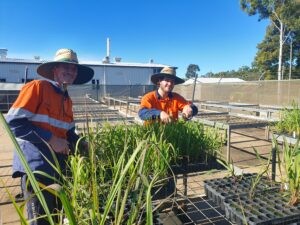
(Above:) Trimming and fertilising seedlings in the nursery on Bundaberg Station is part of the care new clones receive before they are planted out into family plots in Progeny Assessment Trials (PATs).
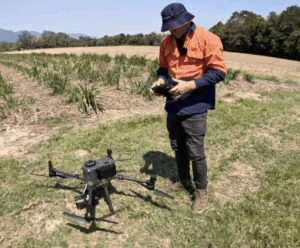
In other news, University of Queensland researchers were in Bundaberg this week to fly a drone and take a range of images of a trial crop. This is part of a research project managed by Breeding Technology Lead Dr Sijesh Natarjan who is looking at predicting CCS using drones. Read more about this project in Cane Matters Autumn 2025 page 6 here.