Sugarcane growers may not realise the importance of SPIDNet, SRA’s plant-breeding information management system, to the future productivity of their businesses. Information management is a major part of all plant breeding programs. Every year, at SRA plant breeders record large amounts of critical data and make selection decisions based on multiple sources of information recorded in one place.
SPIDNet provides the backbone for plant breeding information needed to produce better crosses and ultimately better varieties for growers. Standing for Sugarcane Plant Improvement Database system, SPIDNet was originally developed in 2003 and contains comprehensive trial performance and mill productivity data from that time onwards.
SRA embarked in 2017 on updating SPIDNet to:
- Support data collection for other research activities within SRA, such as pest and weed management, and agronomy
- Collect and display spatial information for observations to improve validation and add other analytical methods
- Allow trial data to be collected and analysed for more than one purpose
- Allow data to be stored and analysed more flexibly – not only field data and including but not limited to stalk, leaf level, data from the laboratory and dataloggers,
- Support modern data collection tools, via Bluetooth and other communication systems,
- Support quarantine processes by recording movement and treatments.
- Enable scheduling activities in the field and laboratories.
Using many of these functions efficiently requires a robust ongoing training system for SRA plant breeders, technicians and other researchers. Variety Support Officer Clare Hogan stepped up to produce the training materials required for this to happen.
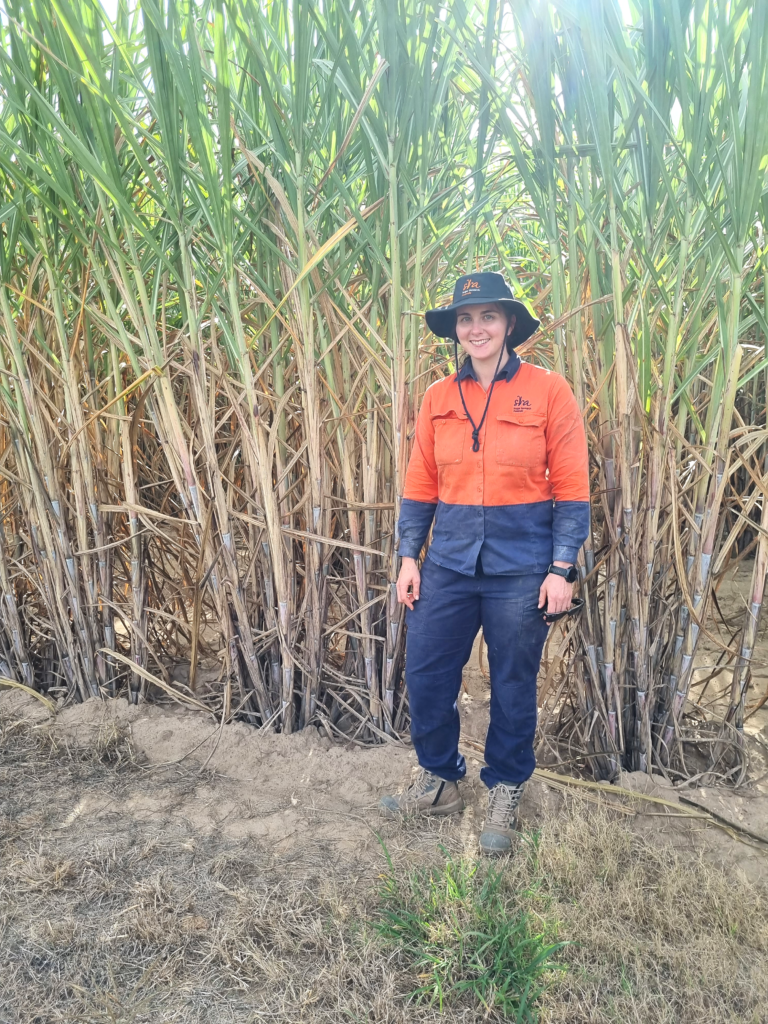
After graduating with an Applied Science degree from Queensland University of Technology, Clare (pictured above) has worked for SRA for nine years, first in the glasshouse and the paddock as a Senior Technologist and Variety Officer at SRA Bundaberg, and today as a Variety Support Officer at IRIS Laboratories in Brisbane.
The SPIDNet was fundamental to her work in plant breeding, however, she recognised that new staff would find it difficult to use without proper training resources. She took on the project of developing these herself, since, as a user, she understood where training support was most needed. The project took her 12 months. Management was impressed with the result and these resources have now been transformed into an online course available across the company. No doubt, when she began her science career in the sugarcane industry at SRA, Clare would not have imagined she would one day be writing training resources which enabled plant breeders to do their job of producing improved cane varieties.