Targeting balanced nutrition and productivity constraints in the Herbert
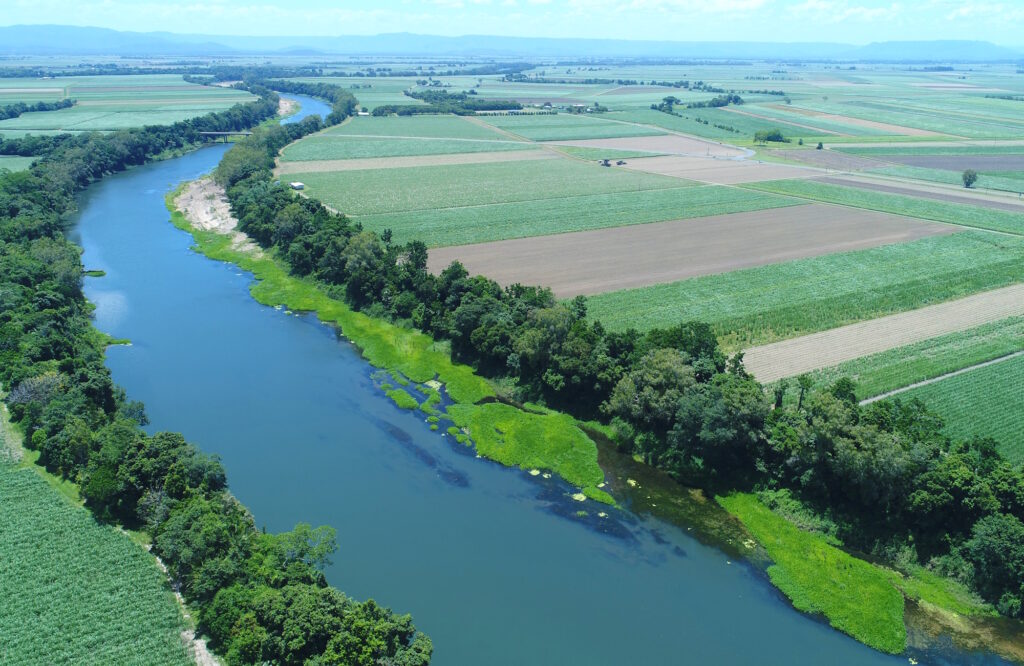
Targeting balanced nutrition and productivity constraints in the Herbert is a two-year project underway in the Herbert River catchment, which is the southernmost section of the Wet Tropics region. The project is being delivered by Sugar Research Australia (SRA) in partnership with Herbert Cane Productivity Services Limited (HCPSL). Under the Reef 2050 Water Quality Improvement Plan, the 2025 dissolved inorganic nitrogen (DIN) target was rated a very high priority for improving water quality.
To help reach this DIN target, this project aims to identify productivity constraints, improve farm management practices to alleviate these constraints, increase adoption of the full SIX EASY STEPS® nutrient management program, and identify opportunities to incorporate the SIX EASY STEPS® toolbox guidance into whole-of-farm nutrient management plans. The rationale is that the DIN loss from Herbert cane farms will be reduced by matching nitrogen fertiliser application to crop requirements, and by alleviating limits to crop growth (e.g. nutrient deficiencies, weeds) to maximise nitrogen uptake. A valuable component of the project will be the provision of tailored one-on-one expert agronomic advice to growers engaged in the project, as well as workshops and training delivered by experts from SRA.
Objectives
Across 5,500 ha (approximately 20 growers) of cane blocks with below-average yields, this project will:
• Translate industry science into improved land management practices via one-on-one expert agronomic advice.
• Promote the adoption of best management practice programs (SIX EASY STEPS, 6ES toolbox guidance, Smartcane BMP).
• Improve catchment water quality outcomes via the efficient use of farm inputs and addressing constraints to productivity.
Under the project, HCPSL will be primarily responsible for the provision of one-on-one advice and support to participating growers. With assistance from HCPSL, SRA will deliver the sampling and analyses needed to identify the cause of productivity constraints. SRA will also be responsible for providing expert advice to alleviate these productivity constraints and facilitate the implementation of the SIX EASY STEPS® nutrient management program.
Expected Outputs
• For participating growers, a customised farm plan based on a review of current farming practices and available records to identify enterprise-specific productivity constraints.
• For each project grower, a tailored whole-of-farm management plan including opportunities to refine nutrient inputs for specific circumstances (as per the SIX EASY STEPS® Toolbox guidance).
• Group training and workshops delivered by SRA Industry Services Research Translation specialists such as the Principal Agronomist, Weed Scientist, Lead Field Pathologist, Entomologist and District Manager.
Some of the project activities (e.g. constraint identification) are expected to have broad applicability across the catchment. Project communications will be important for extending these findings, beyond the participating growers.
Expected Outcomes
• An 1800 kg DIN load reduction for the Herbert catchment.
• Improved crop health, yield, productivity, profitability and overall farm sustainability.
• Increased adoption of Smartcane BMP.
• Herbert canegrowers and their advisors with a greater understanding of the presence and severity of soil chemical constraints and nutrient deficiencies, as well as the incidence and severity of Pachymetra root rot and ratoon stunting disease.
SRA PROJECT CONTACT: Nancy Rincon
RESEARCH AGENCY: Herbert Cane Productivity Services Limited (HCPSL)
CHIEF INVESTIGATOR: HCPSL extension agronomist, Bethany Donker and SRA agronomist, Nancy Rincon
PROJECT NUMBER: 2023/801
END DATE: 30/06/2026

Acknowledgements
Targeting balanced nutrition and productivity constraints in the Herbert is delivered by Sugar Research Australia in collaboration with Herbert Cane Productivity Services Limited and is part of the $4.38 million Sugarcane Practice Change Program funded through the Queensland Government’s Queensland Reef Water Quality Program.
Photography by Herbert Cane Productivity Services Limited