Sugarcane Sucrose Estimation with Hyperspectral Imaging and Artificial Intelligence
The assessment of CSS for genetic evaluation involves manual cutting and transporting several tonnes of samples to the juice laboratories at each SRA site and processing them using near infrared (NIR) systems (SpectraCane). While effective, this method is labour- intensive, low throughput, and costly, representing a significant burden on resources and time. Additionally, this technique relies on destructive sampling of mature cane stalks, which hinders the assessment of dynamic sucrose accumulation variations during crop maturation. In addition, manual handling increases staff workload, heightens the risk of safety incidents and reduced operational efficiency and increase costs.
Objectives
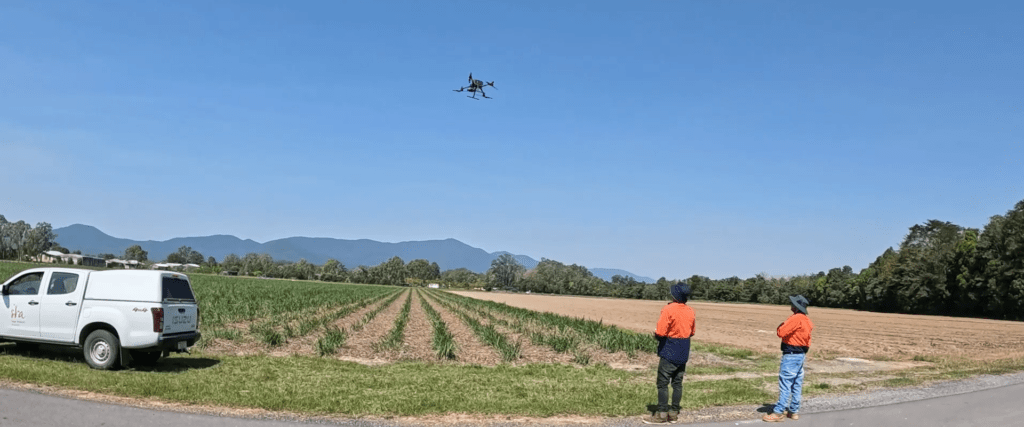
The project aims to develop an automated and scalable non-destructive in-field assessment and monitoring of CCS from hyperspectral imaging and machine learning technologies for implementation in Sugar Research Australia (SRA) plant breeding programme. Accurate in- field CCS data from this presents an opportunity to maximise sucrose productivity for growers and millers. This non- invasive dynamic measurement will address the current limitation of breeding trial data, which only represents a limited number of harvest dates.
Expected Outputs
- Robust AI-driven models for predicting stalk sucrose content using hyperspectral imaging replacing the need for destructive sampling and limited-time-point assessments.
- Reduced labour and time costs associated with traditional NIR spectroscopy, leading to more efficient breeding, and harvesting operations.
- Improved understanding of sucrose accumulation and crop maturity, allowing for the development of varieties with tailored maturity profiles.
- Lower operational costs, with estimated annual savings of around $1.2 million, and more sustainable breeding operations.
Expected Outcomes
- Ability to develop tailored sugarcane varieties with optimised sucrose content and maturity profiles enabling more strategic variety adoption and harvest planning.
- Improved working conditions and safety outcomes for personnel involved in breeding operations.
- Improved efficiency in variety development and accelerated genetic gains in sucrose yield.
- Enable further research to develop solutions integrating AI models with field data for real-time sucrose estimation.
SRA PROJECT CONTACT: Dr Muyiwa Olayemi
RESEARCH AGENCY: Sugar Research Australia
CHIEF INVESTIGATOR: Dr Sijesh Natarajan
PROJECT NUMBER: Project 2024/017
END DATE: 01/09/2027

Acknowledgements
This project is funded by the SRA 10th Anniversary Research Fund Call