Moth Borers – how are we going to manage them when they arrive?
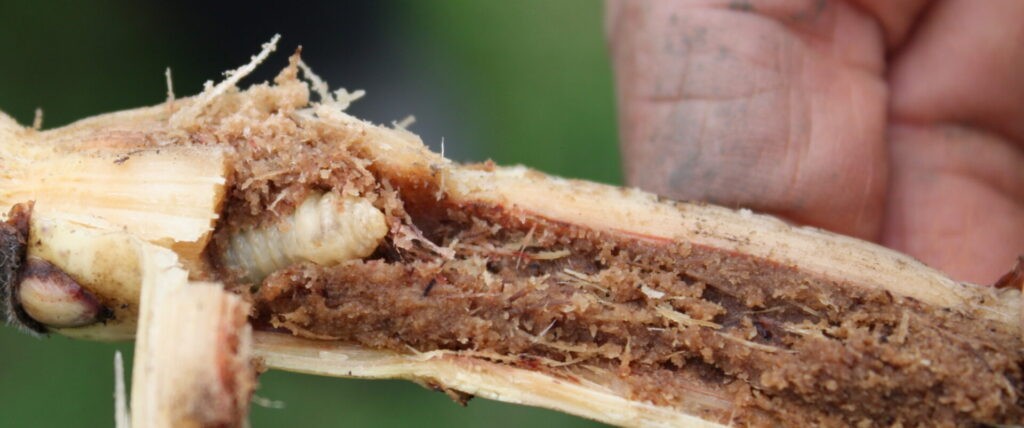
Moth borers represent one of Australia’s most significant biosecurity threats, being common throughout Southeast Asia, including Indonesia and Papua New Guinea (PNG). In these areas moth borers are not successfully controlled and they represent a significant productivity constraint (up to 20% yield reduction).
An incursion of moth borers is considered a likely risk by the Australian Department of Agriculture, Fisheries and Forestry (DAFF). This project is investigating the feasibility of using soil-applied systemic insecticides to manage moth borers in the event of an incursion.
Objectives
Expected Outputs
- An understanding of the efficacy of three soil-applied systemic insecticides for the management f moth borers when applied to plant and ratoon crops.
- Enhanced capability to respond t a moth borer incursion.
- Data sets to support the development of emergency use permits (per APVMA registration requirements) in the event of an incursion.
Expected Outcomes
- Preparedness in the event of a moth borer incursion.
- Growers, advisors, and researcher have a clear understanding of how soil applied systemic insecticides can be used to manage moth borers.
- Increased likelihood of successful application for emergency use of chemicals in the event of an incursion.
- Researchers to develop a much better understanding of the moth borer problem and the best ways of managing this pest.
SRA PROJECT CONTACT: Dr Stephen Mudge
RESEARCH AGENCY: Sugar Research Australia
CHIEF INVESTIGATOR: Dr Kevin Powell
PROJECT NUMBER: 2018/010
END DATE: 01/06/2025

Acknowledgements
SRA acknowledges the co-funding from the Queensland Department of Primary Industries (DPI) for this research activity.