Greenhouse gas emissions from sugar factory boilers
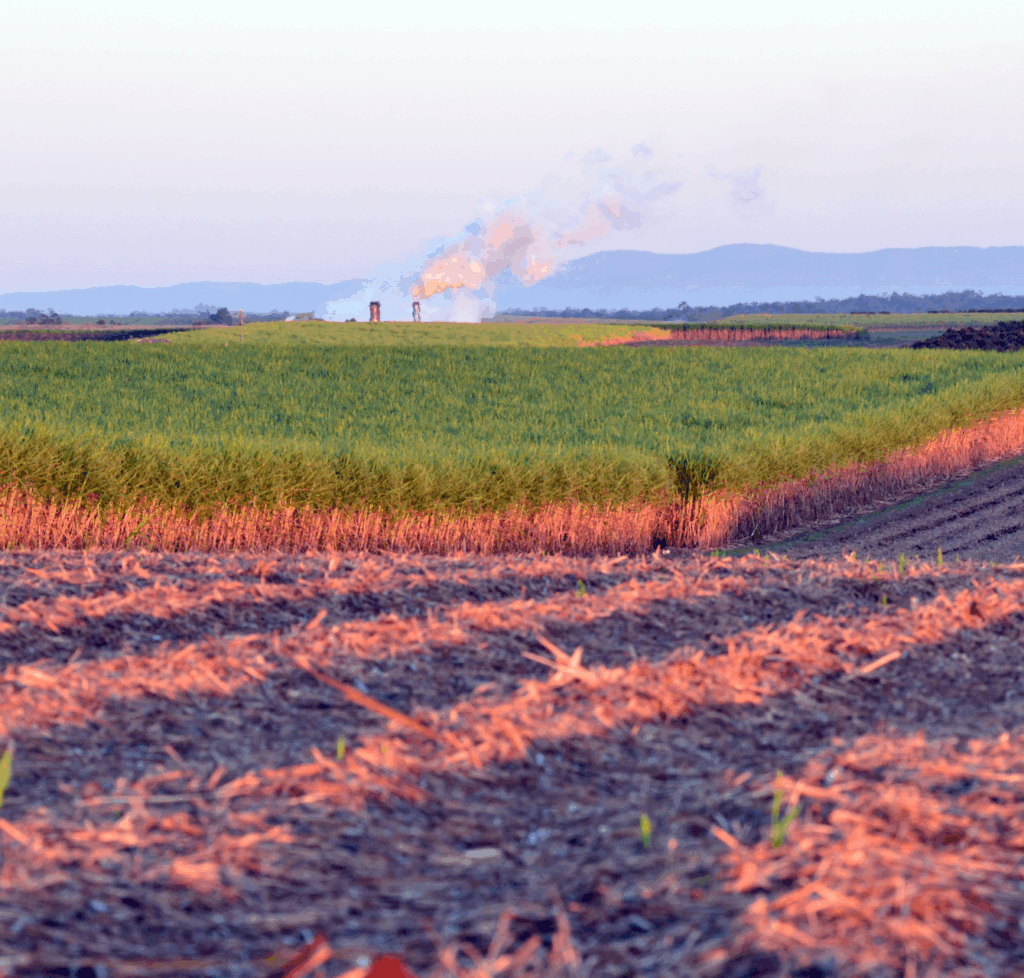
Like most industries, the sugar industry is coming under increasing pressure to reduce reportable greenhouse gas emissions. The final report on Australian sugar milling research priorities released in June 2023 identified net zero as a priority area. Measuring and mitigating nitrous oxide (N2O) emissions was listed as an opportunity and N2O emissions from boiler stacks were identified as the largest single source of emissions for the milling sector of the industry. Preliminary measurements indicate that the emissions factor used to estimate N2O emissions from bagasse combustion is too high and therefore N2O emissions from bagasse combustion are being overestimated. Preliminary measurements also suggest that wet scrubbers reduce N2O emissions and that emissions of methane (CH4), another potent greenhouse gas, are strongly dependent on combustion conditions.
Further investigation is required to determine the magnitude of N2O and CH4 direct and indirect emissions for different boiler designs and a range of combustion conditions. Boiler operating and combustion conditions that reduce emissions of these greenhouse gases need to be determined. The approach for estimating emissions of these greenhouse gases should be updated.
Objectives
• Measure emissions of N2O and CH4 for a range of different boiler designs across the industry.
• Determine effects of boiler operating conditions such as excess air, overfire/underfire air split and steam output on N2O and CH4 emissions.
• Determine effects of fuel properties such as moisture content, ash content, elemental composition and particle size distribution on N2O and CH4 emissions.
• Investigate emissions of N2O and CH4 during boiler start-up during which the mode of combustion transitions from grate combustion to suspension combustion.
• Conduct a literature review to determine the likely effect of wet scrubbing on boiler flue gas N2O, likely fate of any N2O dissolved in scrubber water and whether similar technologies are already utilised for N2O removal in industry.
• Calculate new emission factors for N2O and CH4 to allow discussion with the Clean Energy Regulator regarding the potential for more realistic emissions reporting for sugar milling companies.
Expected Outputs
• Measurements of N2O and CH4 from sugar factory boilers with different designs and for different operating conditions.
• Techniques for reducing N2O and CH4 emissions.
• New emission factors N2O and CH4 will be proposed.
Expected Outcomes
The industry will be able to determine its greenhouse gas emissions from sugar factory boilers more accurately and therefore its progress towards net zero. Conclusions from the project will assist the industry further reduce its greenhouse gas emissions. This will improve the public perception of the sugar industry.
SRA PROJECT CONTACT: Muyiwa Olayemi
RESEARCH AGENCY: Wilmar Sugar Pty Ltd
CHIEF INVESTIGATOR: Line Jenssen
PROJECT NUMBER: 2024/203
END DATE: 01/07/2025