Enhancing Australian sugarcane nitrogen use efficiency: quantifying loss pathways and evaluating novel dual inhibitor effectiveness
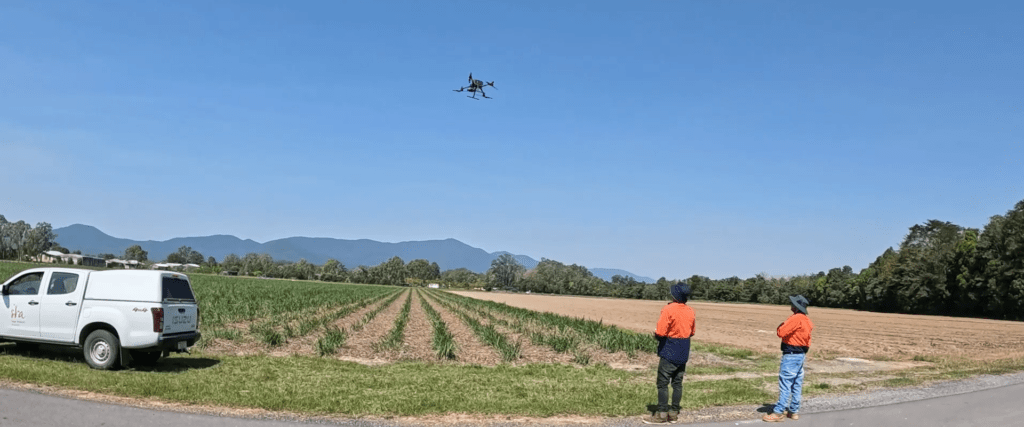
Australian sugarcane systems face significant nitrogen (N) losses, affecting nitrogen use efficiency (NUE) with adverse impacts on production, profitability and the environment. This research project aims to address the critical. Utilizing the combination of laboratory incubation studies, pot experiments, field trials, with open-path FTIR-micrometeorological technology, 15N isotope tracing techniques, and process-based modelling, the project evaluates the effectiveness of DI (combined urease and nitrification inhibitor), relative to existing enhanced efficiency fertilisers (EEFs), in mitigating N losses through N2O emission, NH3 volatilization, leaching, and runoff, particularly in areas adjacent to the Great Barrier Reef (GBR). By quantifying N losses pathways, the project will develop improved management practices to reduce GHG emissions, N pollution to GBR and improve crop productivity. Collaborating with key industry partners including the Queensland Department of Agriculture and Fisheries, Sugarcane Research Australia, Incitec Pivot and the ARC Research Hub of Smart Fertilisers, the project seeks to drive wider adoption of sustainable agricultural practices among farmers. The outcomes are expected to contribute to healthier ecosystems, increased farmer profitability, and the promotion of sustainable sugarcane cultivation practices across the region.
Acknowledgement
This $2.3 million four-year project is fully funded by Queensland’s Department of Primary Industries (DPI). This project will be delivered in collaboration with Incitec Pivot Fertilisers, the DPI and Sugar Research Australia.

Objectives
This project targets N losses in Australian sugarcane systems, specifically through NH3 volatilization, N2O emissions, N leaching, and runoff with three objectives:
Aim 1: To quantify N loss pathways of sugarcane cropping systems
By integrating incubation studies, pot experiments, field trials and modelling, we aim to quantify N losses from various pathways in sugarcane systems, providing a baseline understanding essential for effective intervention.
Aim 2: To investigate the effects of DI on soil N dynamics, N recovery and N emissions
We will evaluate the impact of a novel DI on soil N dynamics, fertilizer N recovery, and N emissions at both paddock and regional scales. The goal is to enhance NUE and reduce environmental impacts compared to conventional fertilization methods.
Aim 3: To simulate N losses under different scenarios and identified Beneficial Management Practices (BMPs)
Using process-based models calibrated with experimental data, we will simulate N leaching/runoff under different scenarios to identify and refine BMPs that optimize fertilizer use, reduce N losses, and improve overall sustainability. Advanced technologies like FTIR-micrometeorology and 15N isotope labelling will be used alongside the application of DI to yield insights into optimizing N management in sugarcane cultivation, aiming for improved productivity and reduced environmental impact.

Expected Outputs
• Detailed experimental protocols
• Data from incubation, pot, and field trials
• Reports and publications on N dynamics and the DI’s effectiveness
• Improved process-based models for N loss simulation
• Industry workshops and dissemination of findings.
Expected Outcomes
Short-term
• Increased understanding of N loss pathways,
• improved knowledge about the dual inhibitor’s effectiveness in sugarcane,
• enhanced N management practices at the farm level.
Medium-term
• Higher adoption of EEFs,
• increased NUE,
• reduction in N fertiliser use,
• improved crop productivity, and
• reduced environmental pollution (e.g., reduced N2O emissions, leaching, and runoff).
SRA PROJECT CONTACT: Cathy Mylrea
RESEARCH AGENCY: University of Melbourne
CHIEF INVESTIGATOR: Professor Deli Chen
PROJECT NUMBER: 2024/505
END DATE: 30//06/2029

Acknowledgements
This $2.3 million four-year project is fully funded by Queensland’s Department of Primary Industries (DPI). This project will be delivered in collaboration with Incitec Pivot Fertilisers, the DPI and Sugar Research Australia.