Development of a resistance screening method for chlorotic streak
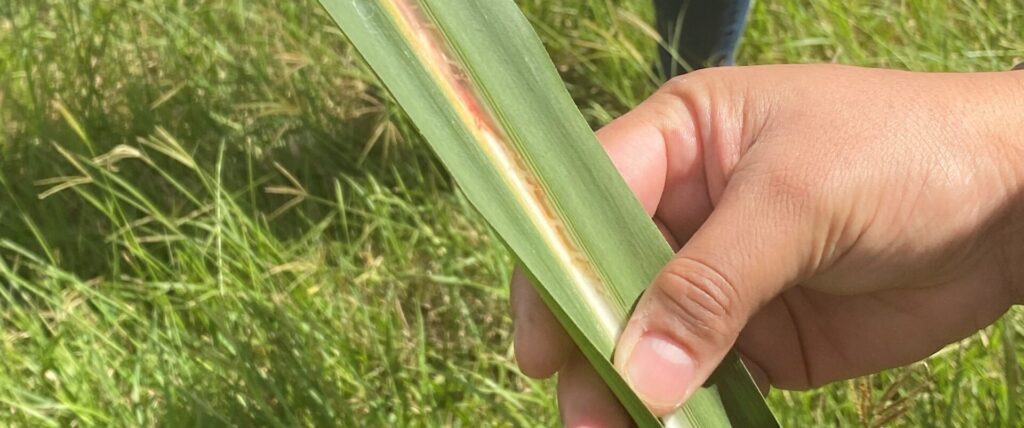
Chlorotic streak (CS), caused by the protozoan Phytocercomonas venanatans is an important disease of sugarcane that can cause up to 40% yield loss if susceptible varieties are planted, costing the Australian sugarcane industry $8 to $lO million annually. The recent identification of the pathogen by SRA researchers provides an opportunity to better assess the resistance ratings of elite clones in the breeding program.
Objectives
- To build on previous work to better understand relationships between clones, symptoms and pathogen load.
- To develop an effective method of screening new and commercial clones for CS disease.
- To determine if xylem samples can be reliably used for CS ratings and diagnostics.
Specific aims are:
1. Identify the most suitable inoculation method, in terms of symptom development and ease of operation
2. Develop a rating method based on symptom assessment qPCR quantification, and percentage of plant height compared to healthy control plants
3. Relate resistance screening data to field reaction, in terms of symptoms development and yield loss.
Expected Outputs
CS ratings for all new varieties being released from SRA’s breeding program.
Expected Outcomes
Chlorotic streak is one of the most widespread diseases within the Australian sugarcane industry and very significant losses are suffered in years of high rainfall (such as La Niña events). It causes significant yield losses in susceptible varieties under favourable conditions, for instance, when crops are subject to waterlogging or flooding.
There is currently no reliable information available to growers detailing the susceptibility of existing commercial varieties. Losses can be reduced when growers are able to choose varieties of appropriate resistance for areas prone to the disease.
CSD resistance information will be extended through Variety Guides, new variety Fact Sheets and other extension mechanisms.
If 50% of growers plant resistant varieties in the CSD-prone fields, the industry could avoid potential losses of up to $5 million annually. Crop cycle lengths may also be extended through better ratooning.
SRA PROJECT CONTACT: Dr Stephen Mudge
RESEARCH AGENCY: Sugar Research Australia
CHIEF INVESTIGATOR: Dr Chuong Ngo
PROJECT NUMBER: 2022/006
END DATE: 01/06/2026