Beyond imidacloprid – Ensuring effective and sustainable canegrub control for the future
Canegrubs are one of the most economically significant priorities for the Australian sugarcane industry. Yield losses can range from 10-20% in moderate infestations to more than 30-40% in severe cases, equating to losses of approximately 30 tonnes of cane per hectare.
Neonicotinoids, and specifically imidacloprid and clothianidin, are the only actives currently recommended for the control of canegrubs in sugarcane and these actives are under review by the Australian Pesticides and Veterinary Medicines Authority (APVMA). There is a high likelihood that neonicotinoids will be either withdrawn completely or have restricted usage by the end of 2028-2029.
SRA has recently completed a project (2020/004), in which 23 products were screened in the laboratory to evaluate their potential efficacy against Greyback canegrub (the most geographically widespread canegrub affecting sugarcane). That projects’ finding identified up to 10 products that now require urgent field evaluation. Field evaluation is required by the APVMA as part of the requirements to support registration of new products or label change where a product may already be registered for other pest control use in sugarcane.
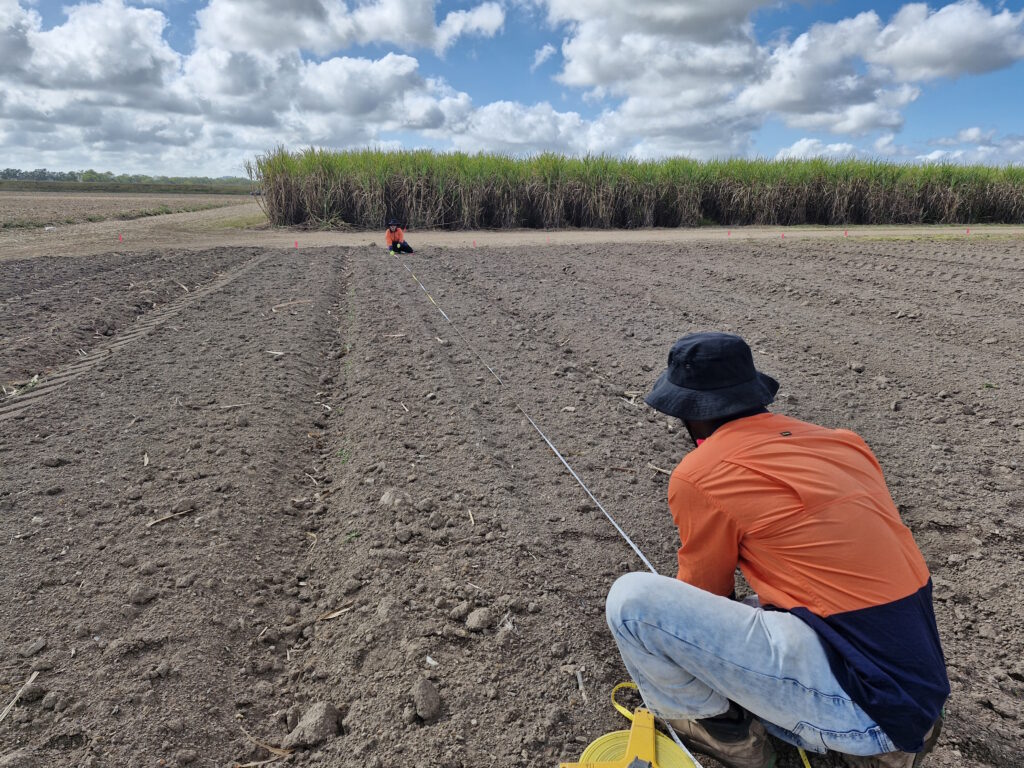
This project is designed to evaluate in the field the efficacy of products, and their soil persistence and soil mobility properties to ensure that any product recommendations are environmentally sustainable.
Without extensive field evaluation there will be no alternatives to neonicotinoids available to the industry once the APVMA delivers its recommendations.
Objectives
This project seeks to identify sustainably effective alternatives to neonicotinoid insecticides to control canegrubs enabling their commercially availability for industry from 2029-30. This will be done by:
• Evaluation, through a single laboratory trial and multiple field trials, of 10 alternatives to two industry standard neonicotinoids – comparing their efficacy towards canegrubs in four different cane-growing regions.
• Testing two types of insecticide under trial conditions (i) established insecticides (which are widely used in multiple crops) and (ii) next generation insecticides with novel modes of action. Comparison of selected environmental properties of alternatives, including soil persistence and water mobility, will be conducted to ensure the products meet environmental standards. .
• Examine the potential for current and future insecticide resistance in canegrub populations in some regions where growers have reported poor product efficacy.
• Deliver comprehensive datasets to collaborating agrochemical companies to support product registration requirements of the APVMA.
Expected Outputs
This project will generate a field efficacy dataset at Technology Readiness Level 6 to support the registration of three established products and up to seven next-generation products with novel modes of action. The dataset will include product performance in controlling canegrubs and impacts on yield loss, and environmental effects such as soil persistence and water mobility. The dataset is expected to be ready by May 2028.
Expected Outcomes
Delivering impacts to industry is dependent on the APVMA withdrawing the commercial sale of imidacloprid and adoption by growers of new insecticide products to control canegrubs.
While first-year adoption targets are difficult to estimate at this stage, they will be refined in the second year of the project as the deployment pathway becomes clearer and adoption barriers—such as product cost, the withdrawal of imidacloprid and leftover quantities of imidacloprid —are better understood. Preliminary estimates suggest high initial uptake, with around 40-50% of growers producing over 8,000 tonnes expected to use the new products in 2029–30. The adoption rate by growers experiencing severe infestation by grubs is expected to be much higher, around 60-70%.
The economic impact of the new products is the prevention of yield losses caused by canegrubs. Current estimates suggest losses of 10–20% in moderate infestations and over 30–40% in severe cases, equating to losses of approximately 30 tonnes of cane per hectare. One report estimates that if left unchecked, canegrubs cost the industry $60 million annually in lost production.
Additionally, the technology may contribute to environmental impacts including reduced chemical use on farms and improved water quality, depending on the products registered. Avoiding imidacloprid use may also support ongoing trade and market access by enhancing environmental performance.
SRA PROJECT CONTACT: Dr Kevin Powell
RESEARCH AGENCY: Sugar Research Australia
CHIEF INVESTIGATOR: Dr Kevin Powell
PROJECT NUMBER: 2025/001
END DATE: 30/02/2028

Acknowledgements
The project is funded by Sugar Research Australia. SRA acknowledges and thanks its investors, including levy payers (sugarcane growers and millers) and the Commonwealth Government.