Advanced Genomics and Spatial RNA-seq to identify resistance genes in sugarcane against soil-borne pathogens
The impact of root lesion nematodes (RKN), root-knot nematodes (RLN) and Pachymetra results in sugarcane yield losses estimated at up to 40%, translating to financial losses of approximately $150 million/year. Commercial sugarcane varieties in Australia are susceptible to RLN and RKN, and effective control methods are lacking. Growers’ options are limited to management strategies such as crop rotation with non-host crops and nematicide applications, which only offer short-term control. Moreover, nematicide application in sugarcane is not cost-effective. Nematode populations rebound to higher levels, impacting subsequent ratoon crops. Recently, substantial investments have been dedicated to introgression projects at SRA to tackle these challenges. These are focused on identifying genes of resistance to the pathogens and ‘introgressing’ (the process where genetic material from one species is transferred into the gene pool of another through cross breeding) the new traits into elite varieties which will increase genetic gain in the breeding program. Research endeavours focus on incorporating novel resistance genes into breeding germplasm to develop sugarcane varieties with enhanced resilience against the pathogens described above.
Acknowledgement
This project is fully funded by the Department of Primary Industries and managed by Sugar Research Australia.

Objectives
The main objective involves leveraging cutting-edge spatial RNA-seq technology to explore the spatial organisation and gene expression patterns within sugarcane root tissues at single-cell resolution after inoculation of the pathogens. This approach will facilitate the discovery and characterisation of genetic factors contributing to resistance and regulatory mechanisms against nematodes and Pachymetra. By integrating this molecular data with phenotypic observations, our goal is to develop precise screening methods, providing more accurate data (replacing visual rating system) to be able to apply quantitative genetic approaches and address the significant challenge of soil-borne diseases, specifically parasitic nematodes and Pachymetra, in the Australian sugarcane industry. In the longer term, identifying genes that govern resistance mechanisms will empower breeders to strategically stack quantitative trait loci (QTL) and quantitative trait genes (QTG). This will enable the industry to cultivate sugarcane varieties with broader and more robust disease resistance profiles, thereby expanding options without compromising on genetic integrity.
Expected Outputs
• Standardised protocols for inoculation, sample collection and cytological analysis.
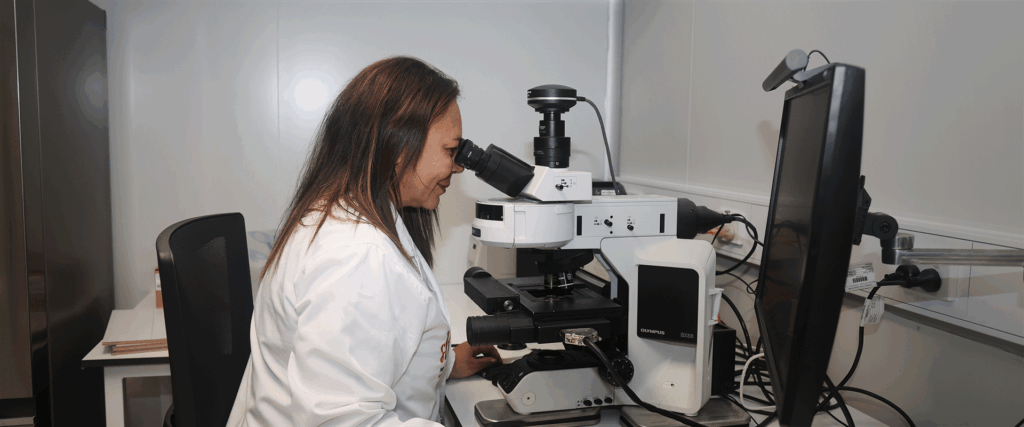
• Detailed cytological studies to understand the timeline of infection and the phenotypic responses of sugarcane to pathogen infection.
• Identification and initial characterisation of genetic sources of resistance to RKN, RLN, and Pachymetra using spatial RNA-seq technology
• A comprehensive database of resistance-related genes identified through spatial transcriptomics analysis.
• Fine mapping of resistance genes to facilitate breeding efforts.
• Incorporation of identified resistance genes into the SRA breeding program.
• Creation of qPCR and/or LAMP assays for detecting resistance genes.
• Workshops sessions for pathologists to apply new screening methods and with growers/millers to promote new methods.
• Filing of patents for novel screening methods and identified resistance
By the end of the project, these outputs will collectively enhance the ability to screen for and breed sugarcane varieties resistant to soil-borne pathogens, ultimately contributing to the sustainability and economic stability of the Australian sugarcane industry.
Expected Outcomes
• Identification and characterisation of key resistance genes against two parasitic nematodes and Pachymetra. This will provide a robust genetic/molecular foundation for breeding programs, enabling the introgression of core activities to produce sugarcane varieties with enhanced resistance to soil- borne pathogens. This will reduce crop losses, increase sugarcane yield, and improve genetic gain. Accelerating the development and early release of resistant varieties ensures the long-term sustainability and productivity of the sugarcane industry, with an estimated annual saving of about $150 million.
• Development and implementation of better molecular-based screening methods leading to more efficient, accurate and repeatable rating system for nematodes and Pachymetra leading for clone selection during the breeding cycle. Reduction of reliance of labour intensive and time-consuming traditional screening methods will result in cost/time efficiency savings.
These outcomes collectively aim to enhance the cane-growing industry’s resilience, sustainability, and profitability, ensuring long-term viability against soil-borne diseases.
SRA PROJECT CONTACT: Dr Muyiwa Olayemi
RESEARCH AGENCY: Sugar Research Australia
CHIEF INVESTIGATOR: Dr Nathalie Piperidis
PROJECT NUMBER: 2024/513
END DATE: 1/08/2028

Acknowledgements
This project is fully funded by the Department of Primary Industries and managed by Sugar Research Australia.