
Gearing up for a diversified Australian sugarcane industry was the focus of an SRA-funded project* which concluded last year. Now the Chief Investigator, QUT researcher, Madeline Smith’s work on the bioeconomy has stepped up a notch, indicating that Australia has the potential to lead in the development of bioenergy and value-added products from sugarcane and other agricultural byproducts.
A QUT report into Australia’s bioeconomy published today has called for a national strategy and outlined the five key steps needed to grow a sustainable economic future.
The report, published by Madeline Smith (above) and other researchers from QUT and the ARC Centre of Excellence in Synthetic Biology, Dr Jerome Ramirez (above) and Professor Ian O’Hara, says “now is the time for Australia to act to compete in this rapidly growing global market”.
The bioeconomy includes economic activity that uses biological resources, such as plants, animals, and organic waste, to produce food, energy and materials in a sustainable way.
The report identifies key economic growth opportunities for Australia including biomanufacturing of sustainable products and materials, value-adding to Australia’s primary industries, the development of new foods and feeds and the manufacturing of low carbon liquid fuels and renewable gases.
As examples, Australia is at the forefront of developing new food ingredients including proteins produced through precision fermentation and has the potential to lead in the development of sustainable aviation fuels from agricultural industry byproducts.
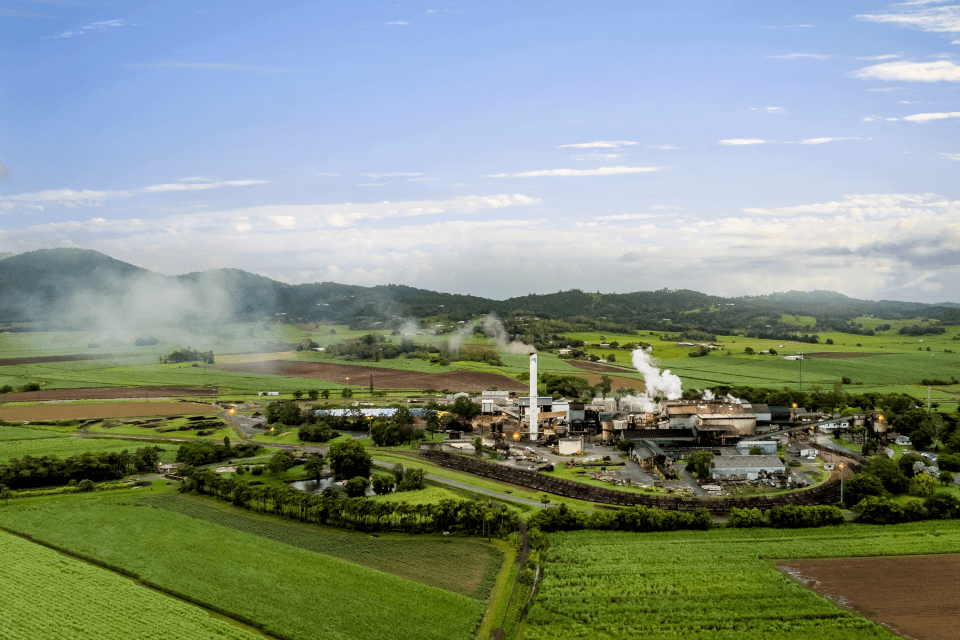
Critical to success will be to develop scale-up facilities to better translate research from the laboratory to commercial scale. As an example, the recently upgraded Mackay Renewable Biocommodities Pilot Plant located at Mackay Sugar’s Racecourse Mill in the Greater Whitsundays Region of Queensland is supporting the sugar industry to diversify into a wider range of value-added products, however more focus is needed on this very important aspect of technology scale-up and translation.
The report makes five key recommendations to advance Australia’s bioeconomy:
- Develop a national bioeconomy strategy: Assess capabilities, prioritise growth, and identify strategies for market, workforce, and regional benefits.
- Cultivate world-class, economic and scalable bioeconomy feedstock: Invest in feedstock development and optimise farm-to-market supply chains.
- Build infrastructure to scale bioeconomy solutions: Fund pilot and pre-commercial biomanufacturing infrastructure.
- Grow bioeconomy workforce skills: Expand education and training programs with a focus on regional development.
- Invest in bioeconomy research, development and translation: Establish large-scale collaborative research programs.
The Growing Australia’s Bioeconomy report here available online.
(Above): QUT Researcher Madeline Smith with Dr Jerome Ramirez at the Renewable Biocommodities Pilot Plant located at Mackay Sugar’s Racecourse Mill.
*Project 2022/018 Building industry engagement capability for a diversified and adaptable Australian sugarcane industry.