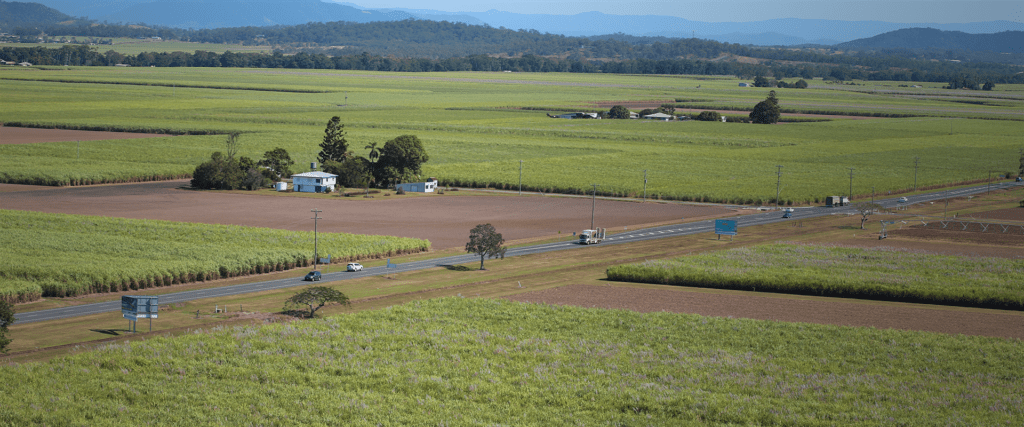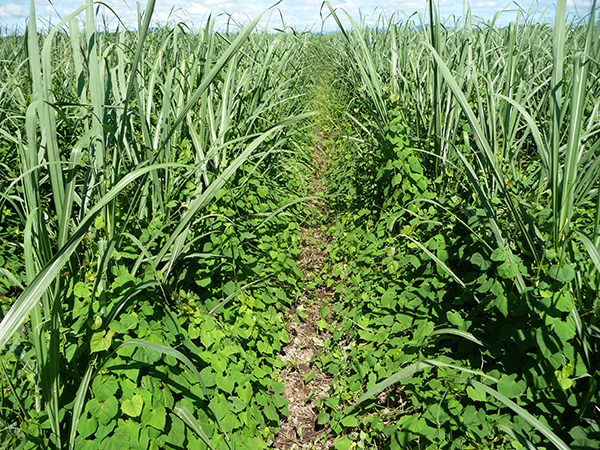
Across the Herbert, sugarcane growers are taking a closer look at what’s holding back productivity — and receiving tailored support to address the issues identified. Thanks to Queensland Government funding, a collaborative project between Sugar Research Australia (SRA) and Herbert Cane Productivity Services Limited (HCPSL) is offering tailored one-on-one extension on-farm, focused on identifying and overcoming the specific challenges each grower faces.
At a project workshop in May (below), Dr Barry Salter, SRA Manager for Translation Research, supported by Nancy Rincon and Erin Headon, Translation Research Agronomists, presented a whole-of-farm approach to identify and manage nutritional constraints using the guidance and tools in the SIX EASY STEPS® nutrient management program.
For some growers, the workshop was an opportunity to return to the basics of nutrient management decisions on-farm – understanding soil and nutrient uptake and loss processes – and developing a greater understanding of the principles underlying their nutrient management plan recommendations.
Daryl Morellini, who farms in the Lower Herbert district, is one of the project growers who attended the workshop. He found it to be a valuable reminder that understanding soils on your own farm is a ‘necessity’.
“I am always looking to improve yield”, but “we only focus on putting four fertiliser requirements [Nitrogen, Phosphorus, Potassium, and Sulphur: NPKS],” Daryl said.
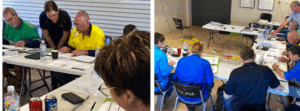
(Above): Participating growers took part in a workshop in May, presented by SRA Manager, Translation Research, Dr Barry Salter, supported by Translation Research Agronomists, Nancy Rincon and Erin Headon.
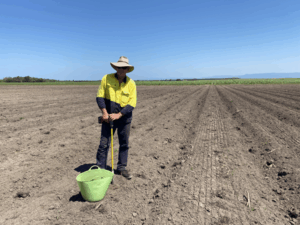
Darryl Morellini
Awareness of the need for balanced nutrition and a long interest in establishing trials to better compare practices on his own farm is why Daryl (pictured above, sampling his soil) has taken steps to address STEP 5 of the SIX EASY STEPS® – check the adequacy of nutrient inputs on farm. As part of the project, Daryl and HCPSL Extension Agronomist Bethany Donker, collected leaf samples from key blocks to assess nutrient uptake. Daryl’s most recent leaf samples showed adequate nutrient uptake across key blocks of interest, while several other project growers’ leaf tests indicated potential nutrient constraints.
“Leaf tests are a valuable tool,” Bethany said. “Alongside soil tests, they allow you a two-fold approach where you can check the nutrients available in the soil by your soil test and then confirm the uptake of nutrients in your crop via the leaf test. In some cases, we can detect a hidden hunger in the cane where nutrient supply might not be adequate.”
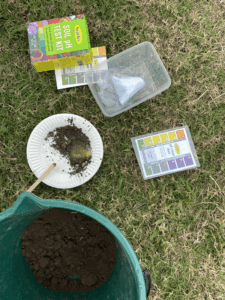
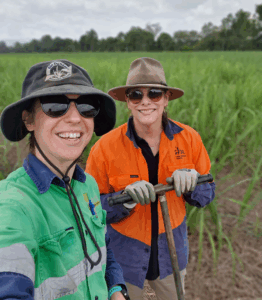
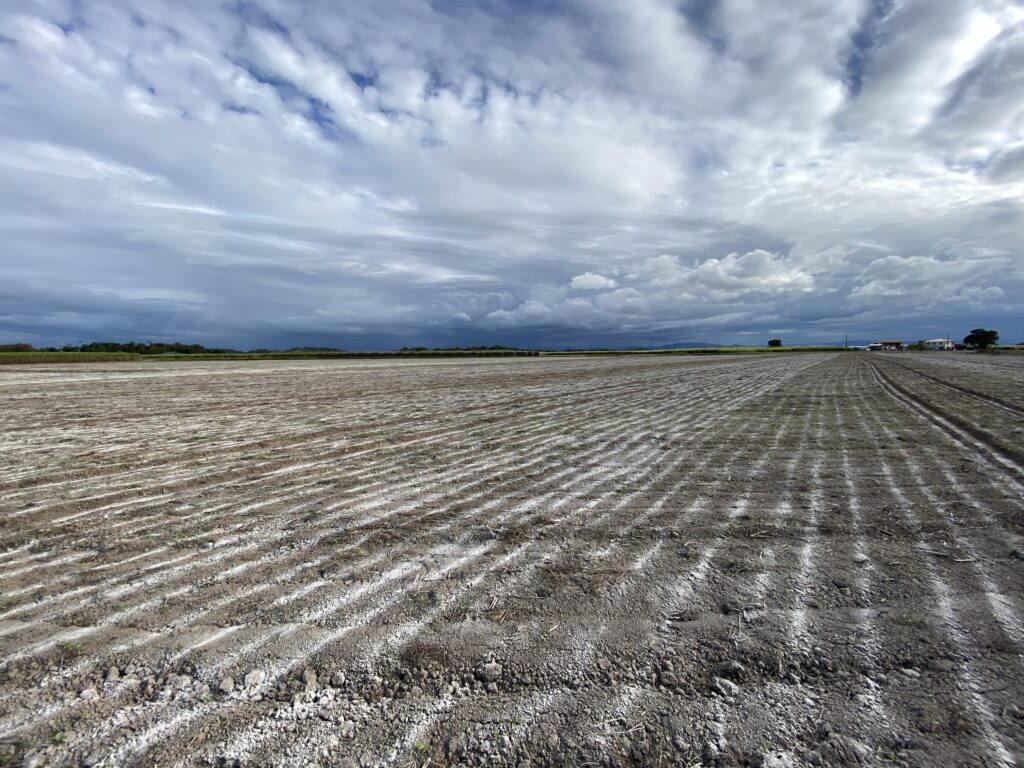
(Left) Four tonnes/hectare of lime were applied to this farm, based on test results. (Above centre) This pH test kit was used to assist a grower do a quick in-field check after concerns about the potential loss of lime applied late last year on a block scoured by the recent flood. (Right) Bethany Donker and Nancy Rincon, soil sampling.
Nancy Rincon, SRA agronomist, has been addressing soil amelioration with ten project growers to determine if the application of soil ameliorants during the fallow meets crop requirements, especially when the crop cycle extends beyond four ratoons. This is especially important because a review of Herbert soil results in the past 15 years showed a decrease in exchangeable (plant available) calcium and magnesium that suggests ‘growers are not applying enough of these nutrients to maintain soil fertility’ (Sartor, 2025).
Further soil testing is recommended when the crop cycle is extended beyond four ratoons. “Liming is not a ‘set it and forget it’ task,” Nancy said. Amelioration plans and strategic soil testing of older ratoons are simple steps that take the guesswork out of whether soil pH and nutrient supply are sufficient to support longer crop cycles.
In addition to practical recommendations to address soil amelioration and nutrient requirements, project participants also received guidance in pest and disease testing for Pachymetra root rot, smut and ratoon stunting disease (RSD).
Past analysis of productivity constraints in the Herbert pointed to Pachymetra root rot as a potential factor for poor ratooning in blocks where there is a history of growing intermediate or susceptible varieties, particularly in Lower and Central Herbert soils (Holzberger et al. 2016, Stringer et al. 2016). Reduced yields, failed ratoons and stool tipping are serious constraints to production and should be a trigger for sampling to assess Pachymetra spore levels and the selection of the most appropriate variety.
In the past 12 months, the project team has collected more than 95 samples as part of a district-wide survey to determine the incidence and severity of Pachymetra. Sixteen of the 19 project growers obtained their first Pachymetra sample in five years as part of this survey and, where spore levels indicated potential yield loss, the growers altered their variety selection as a result.
Throughout the project, there has been a strong focus by the advisors in supporting growers gather more information to make informed decisions and identify potential strategies that enable growers to take practical steps towards addressing constraints. Adam Royle, HCPSL Manager, sees this approach generating immediate and long-term benefits for sugarcane growers in the southern Wet Tropics.
“So much of the work we [HCPSL and SRA] traditionally do with growers is either group-based or opportunistic one-on-one extension and advice, so to be able to work much more closely with individual growers has allowed project staff to build better relationships with growers and provide more tailored advice. We’ve also noticed that growers have enjoyed the opportunity to work more closely with extension staff and agronomists to fine-tune their decision-making process and ultimately drive productivity and sustainability on their farms.”
In the coming months, Adam and the project team are keen to see expert advice implemented as on-farm actions to improve yields for Herbert region growers.
“It’s great to see growers becoming more confident dealing with some of the more complex constraints to their production, such as soil health and crop nutrition. Through the relationships that staff and growers have built together throughout the project, we certainly expect the good work to continue well beyond the project.”
Acknowledgement
Targeting balanced nutrition and productivity constraints in the Herbert is delivered by Sugar Research Australia (SRA) and Herbert Cane Productivity Services Limited (HCPSL) and is part of the $4.38 million Sugarcane Practice Change Program funded through the Queensland Government’s Queensland Reef Water Quality Program.

Photo credit: SRA thanks Bethany Donker for the photos.
References
Holzberger, G, Magarey, RC, Di Bella, L, Bull, JI, Nielson, R, 2016. Pachymetra root rot survey in the Herbert River district 2014-2015. Proceedings of the Australian Society of Sugar Cane Technologists conference, volume 38, pp. 65-71.
Sartor, JA, 2025. Trends in soil chemical fertility within the Herbert district. Proceedings of the Australian Society of Sugar Cane Technologists conference, volume 46, pp. 330-335.
Stringer, J, Croft, B, Di Bella, L, Sefton, M, Nielson, R, Larsen, P, De Lai, R, Davies, I, 2016. Optimising productivity and variety recommendations through analysis of mill data. Proceedings of the Australian Society of Sugar Cane Technologists conference, volume 38, pp. 65-71.