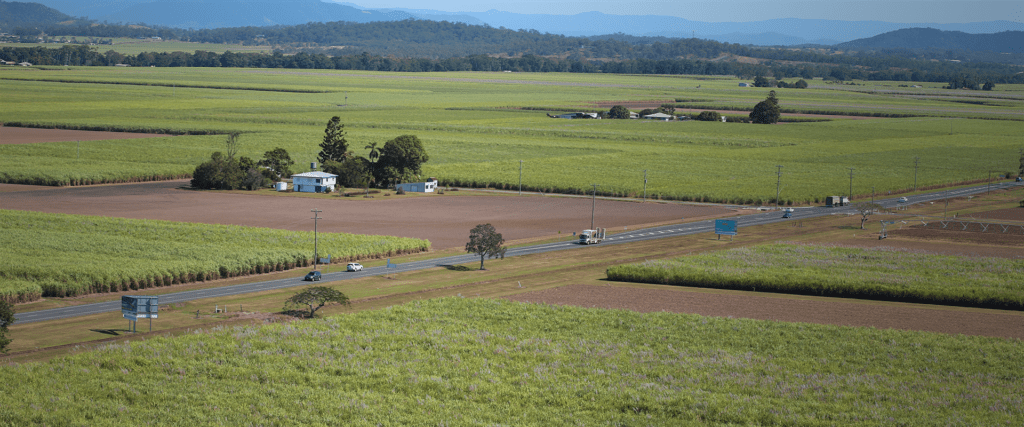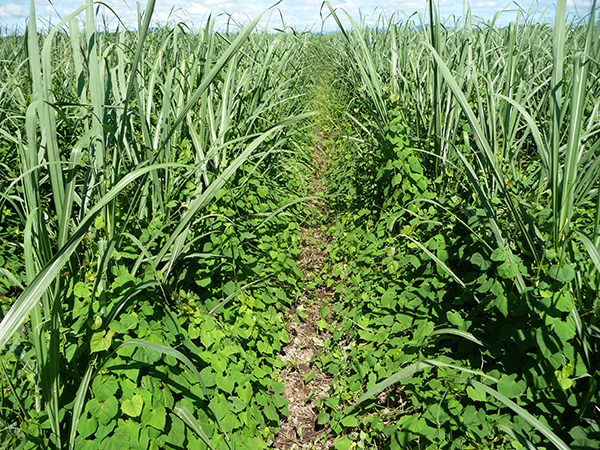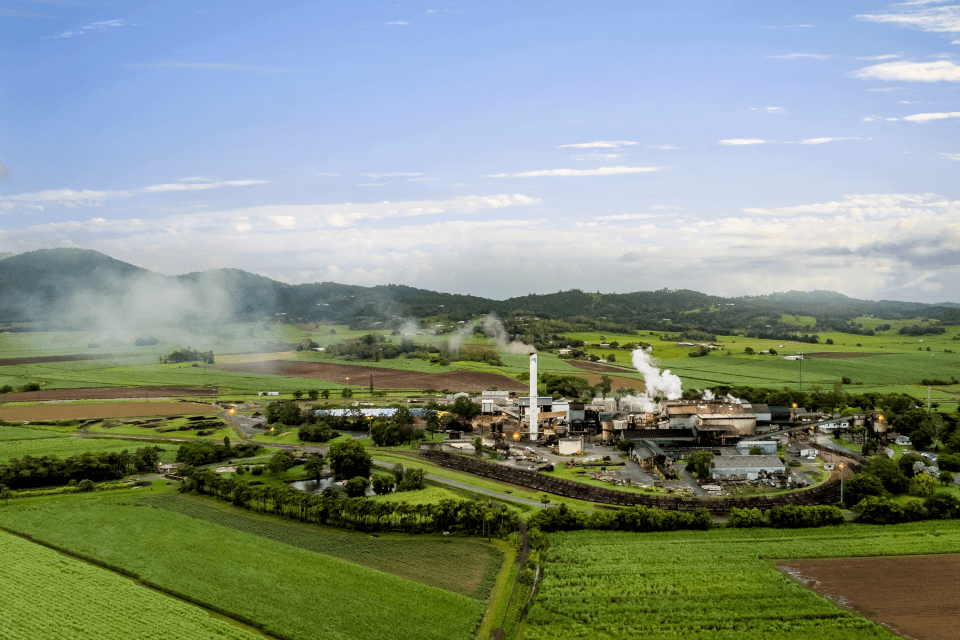
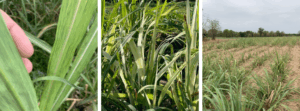
(Above, left): Sugar Cane Streak Mosaic Virus (SCSMV) symptoms seen in Indonesia (Centre) White Leaf symptoms seen in Thailand and (Right) the effects of mothborer and White Leaf disease in combination on a sugarcane crop in Thailand.
Field trial sites have been set up for two projects of significant biosecurity importance for the Australian sugarcane industry, led by SRA Entomology Leader, Dr Kevin Powell.
Sugarcane streak mosaic virus (SCSMV) is a disease caused by a virus which gives the leaves a papery look, decorated with long light green streaks. It directly affects photosynthesis and growth leading to a significant decrease in cane yield and sucrose content, and therefore serious economic losses. The vector of transmission is unknown but suspected to be an insect.
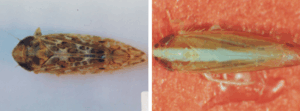
(Above): These leaf hoppers transmit the phytoplasma causing white leaf disease.
White leaf disease is another devastating disease caused by a phytoplasma which is a type of bacteria that leads to leaf whitening, reduced chlorophyll, and excessive tillering, resulting in lower sugar yield. It is transmitted by insects called leafhoppers.
Neither disease is yet known in Australia but are known to occur in neighbouring sugarcane producing countries.
A three-year project – 2024/015 – Characterising the vector of sugarcane streak mosaic virus: a major biosecurity threat for Australian sugarcane – and a 12-month project – 2024/401 Proactive Preparedness for incursion of Leafhopper vectors of White Leaf Disease: A Major Biosecurity Threat – have commenced at sites in Papua New Guinea (PNG), Indonesia and Thailand.
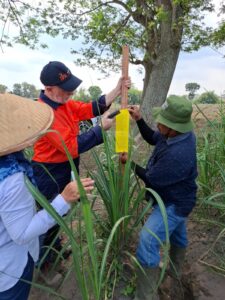
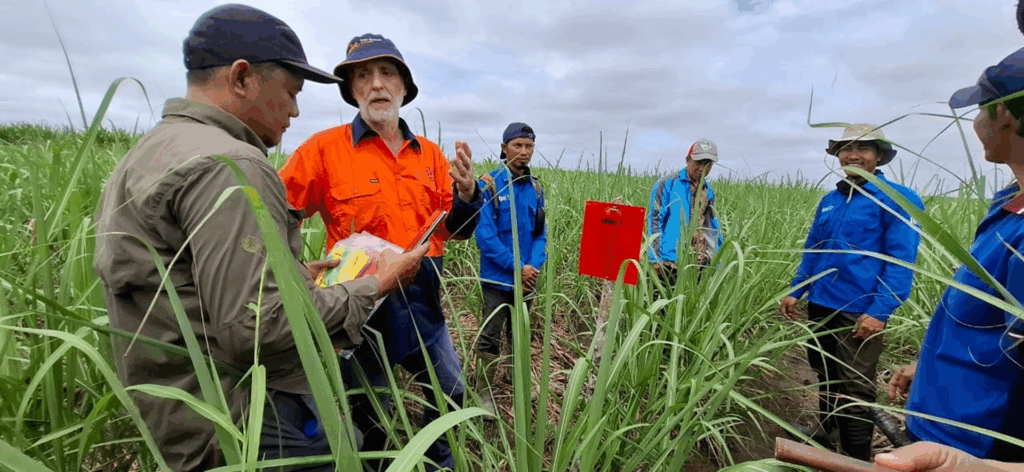
(Above and at top): Setting up insect trapping sites for potential vectors of SCSMV.
Dr Powell recently returned from inspecting the sites where monitoring has begun, and his team are analysing insect trap samples from previous trials in the area. The initial report of the work analysing samples is expected early next year.
With more knowledge about the insect vectors, Australia will be better prepared for a potential incursion through more targeted surveillance and detection and management options.