NQ Severe Flooding – Learnings and Grower Feedback
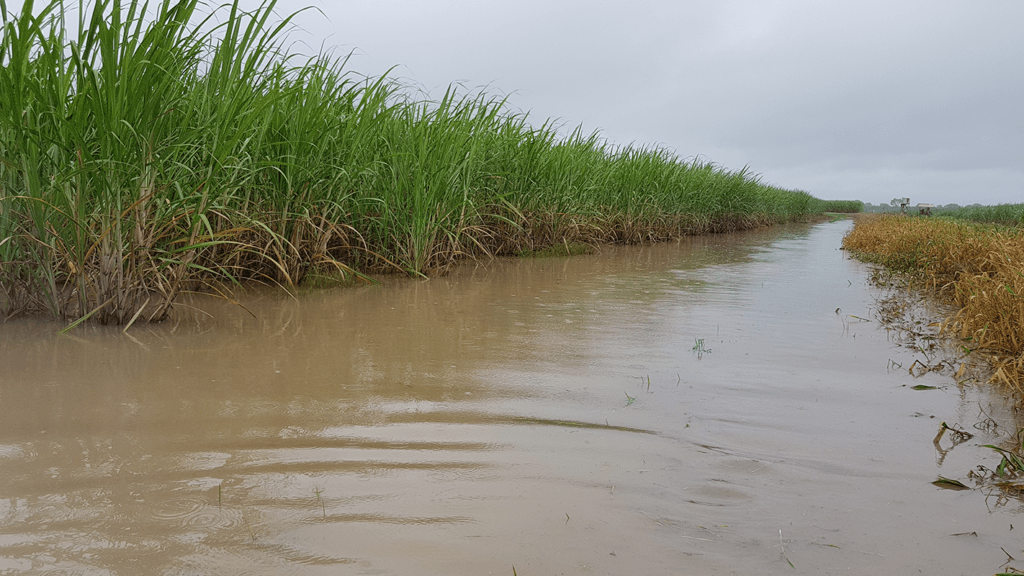
Following the significant flood events across Far North Queensland in 2023/2024, a series of workshops were held to support the sharing of information between researchers and growers. These workshops provided the opportunity for SRA researchers Dr Danielle Skocaj, Ms Emilie Fillols and District Manager Far North Mr Gavin Rodman, to answer questions where needed and for growers to share feedback on practices that were helping overcome the impacts from these events. Learnings from these floods can help prepare for or identify strategies to minimise the impact of r future flood events.
- What will be used for planting material?
A severe flooding event can result in sub-optimal planting material quality (e.g., severe side shooting and piping) and increased severity of Chlorotic streak disease (CSD). This may lead to more problems for growers including poor germination, gappy crop establishment, increased weed competition and shorter crop cycles.
During plant source inspections, productivity services officers will collect samples for RSD testing but also be on the lookout for any other issues such as, chlorotic streak (CSD), Red rot, Top rot, side shooting, rat damage, other pests and problematic weeds. In some cases, growers may be forced to use material that is less than ideal. However, this may introduce new and unexpected problems that may be difficult to overcome in the short-term.
- Should severely flood-affected paddocks be replanted this season?
Ploughing out and replanting flood-affected paddocks might seem necessary to meet sugar supply agreements, but it may be better to leave the paddock fallow, especially if continued rainfall may delay planting operations, the climate forecast favours La Nina conditions or an early onset of the wet season is predicted.
Following a major flooding event, if more rain, flooding or an early wet season is forecast, and low-lying blocks need to be re-established, it is important to weigh up all options. If these blocks cannot be planted early, a two-year fallow might be the best solution.
- What could be done with paddocks that have patches of cane removed by flooding or “dead” areas scattered throughout?
Decisions should be made on a case-by-case basis. Older ratoon crops that were intended for only one or two more harvests might be best left as they are with increased focus on good weed control. Patch planting may be considered for younger ratoons. In some cases, re-aligning block boundaries and fallowing or replanting larger areas might be necessary.
- How are nutrient levels in the soil affected after being underwater for extended periods of time?
In anaerobic conditions (*soil that’s lacking oxygen), nitrogen is susceptible to loss through denitrification. However, as crops experiencing prolonged waterlogging have reduced ability to accumulate biomass the demand for nitrogen will be lower and yield is unlikely to be impacted for one season.
Other nutrients such as calcium, magnesium and potassium can attach to clay and organic matter in the soil and phosphorus is also relatively immobile in the soil. These nutrients are unlikely to be lost unless soil has moved offsite.
Sandy soils are different, because they don’t have the same ability to retain nutrients as soils containing clay and organic matter. There is potential for some nutrients to leach in 6.
- Will there be extra nutrients contained in silt?
The deposition of sediment, specifically silt and clay, may also contain some nutrients. However, in most circumstances this is an infrequent or one-off event, and is unlikely to provide sufficient nutrients to discount fertiliser inputs in the following crop.
- Dealing with thick silt – growers’ experiences
Flooding can result in thick silt deposits, which can increase soil moisture retention and cause issues with surface sealing. Growers have found success using finger rakes, shallow tynes and scratchers repetitively over a period of a week or more to break up silt deposits. Rainfall after flooding can help remove silt from crops, preventing secondary issues like crop deterioration and pest infestations.
- Should a new soil sample be taken after a major flooding event?
If a soil sample was collected and analysed from fallow or plant cane blocks before a flood, and severe soil erosion or deposition has been experienced, a new soil sample should be collected. It is possible the results of a soil sample collected pre-flood will differ to those of a soil sample collected post-flood. It is advisable to resample wherever soil scouring, or deposition has been observed.
- When should soil samples be collected?
If soil samples haven’t been collected immediately after harvest, because wet weather has impacted site access, wait until the soil has had time to dry out a little. Ideally the soil should not stick to your hands when it is collected and be easy to mix. This helps ensure a representative subsample is obtained and laboratory soil test results are reliable.
- If planting was completed late in the season and a flood event has cut a path through the middle of a paddock, does lime need to be reapplied?
Collection of a new soil sample is recommended. The results of that soil test should then be used to determine if lime (or other soil amendments) need to be reapplied.
- What are some of the solutions growers have trialled to deal with thick trash deposits left after a flooding event?
Growers have tried trash rakes, slashers, and spinner rakes with varying success. Trash rakes are less effective on thick matted trash, while slashers and spinner rakes have shown better results in opening up the stool and encouraging tillering.
- Sometimes for safety reasons, to rid paddocks of logs and debris, burning the crop prior to harvest may be considered. Has SRA noticed any difference in germination in those low-lying blocks that have experienced flooding? Are there benefits to burning the cane?
The cane may appear to re-grow much faster after burning, however, in terms of improving ratoonability and stooling, there is unlikely to be any difference.
Any impact on the crop associated with the breakdown of plant debris deposited by floodwaters has already occurred before it’s time to harvest the crop.
Advise the harvesting contractor of the potential for foreign materials to be present when harvesting crops impacted by flooding. Also advise contractors of any washouts or hazards that could not be repaired prior to harvest.
- Are there products commercially available to stimulate the growth of cane that has been stressed by flooding?
While some products may be marketed for this purpose, stressed crops are unlikely to be responsive.
- Is aerial application of liquid fertilisers effective?
Only a small proportion of the total crop requirements can be taken up through the sugarcane canopy. Nutrients including nitrogen need to be applied at a low concentration to ensure the leaves are not burned. Given the small amount of nutrients provided the alternative would be to apply small quantities often but this isn’t economical.
- What is recommended for fertiliser application post-flooding, once the crop is harvested and ratooned?
It’s best to return to the normal fertiliser strategy as determined from interpreting soil test results using the SIX EASY STEPSTM nutrient management guidelines for your region. If it’s a plant cane crop or it’s a ratoon crop, and there has been severe topsoil movement, the best thing to do is to take another soil sample. This will allow any changes to nutrient inputs to be identified.
- How do stress events such as flooding impact crop behaviour?
Unfortunately, stress events like severe flooding slightly encourage flowering. Crop growth is likely to be stunted initially due to unfavourable growing conditions, then further impacted by an increase in flowering. Flowering will stop stalk elongation and more energy can be diverted towards suckering (if conditions are favourable). It is likely that both cane yield and CCS will be affected by severe stress events.