Pesticide-free control strategies for soldier flies and canegrubs are being explored in a project funded by the Department of Primary Industries and SRA.
Led by Dr Kayvan Etebari from the University of Queensland’s School of Agriculture and Food Sustainability, the project aims to identify naturally occurring insect-specific viruses that can be used to control the pests.
“In the first stage, the project is identifying and testing naturally occurring insect-specific viruses that infect soldier flies and canegrubs. Promising virus candidates will then be assessed for their ability to reduce pest survival, development, or population fitness,” Dr Etebari said.
“The project aims to deliver practical virus-based biocontrol options for managing these devastating pests, helping to improve sugarcane yields and reduce environmental risks,” he said.
“As the project progresses, promising viruses or their derivatives could be developed into field-delivered biocontrol products, such as soil formulations, or delivery systems that help spread infection through pest populations. The final format will depend on virus efficacy, host specificity, and production feasibility.”
The project will:
- Use studies of the structure and function of the genetic material from targeted microorganisms (metagenomics) to find new viruses that kill insects in major sugarcane root pests (soldier flies and canegrubs).
- Test how well newly-found and imported insect-killing viruses work against the greyback canegrub, the main sugarcane pest.
- Find out how common these natural viruses are in greyback canegrubs, where they occur, and how well they infect and kill the pest.
- Check whether these viruses could be turned into a safe, effective product that farmers can use as a commercial biocontrol.
The project will also improve science’s overall knowledge of insect-specific viruses of root-feeding pests of sugarcane and better understand the potential interactions between these viruses and their hosts, which could lead to identifying new biological control agents.
“If the project is successful, growers will benefit from an alternative option for controlling canegrubs in the event of imidacloprid being restricted in the future,” Dr Etebari said.
“They will also benefit from a new approach to managing soldier fly, a pernicious pest which cannot currently be controlled using insecticides or by deploying resistant sugarcane varieties.
“In the long-term, this could reduce economic losses due to these pests and decrease reliance on and the need to invest in expensive chemical insecticides.”
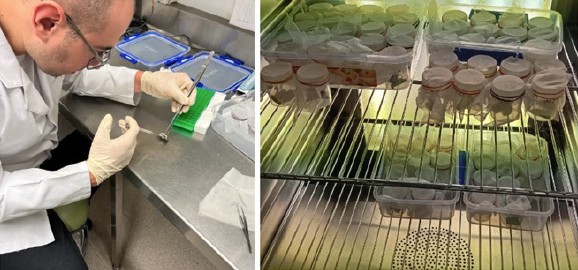
(Above, top): injection of an adult greyback cane beetle with recently isolated viruses and preparation of the insect for monitoring. (Below): the outcome of a 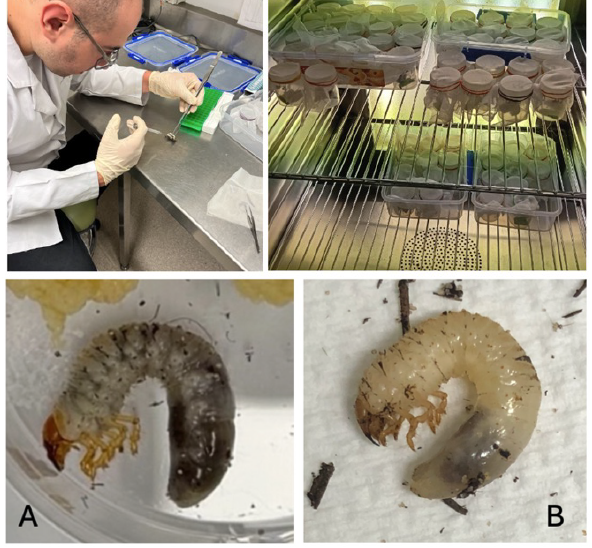
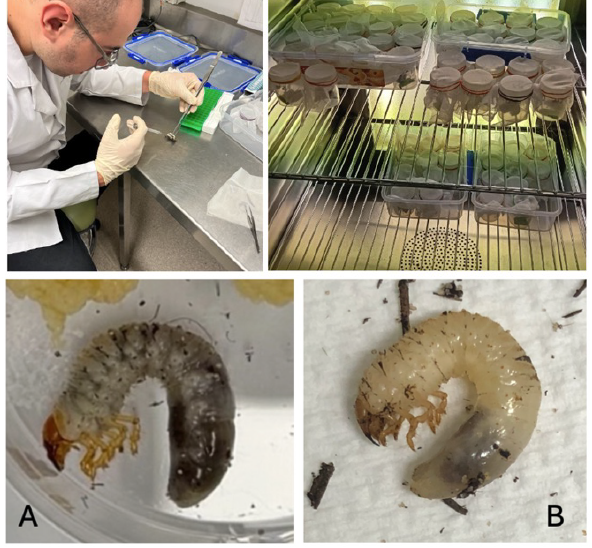
Acknowledgement
This project is funded by the Department of Primary Industries and SRA.