New weed management guidelines for mill mud users to achieve effective herbicide use, through choice of chemical, timings and/or methods of applications are the focus of a project led by SRA Weed Scientist Emilie Fillols.
The project is wholly funded by the Department of Primary Industries and managed by SRA, with research collaborators from James Cook University (JCU).
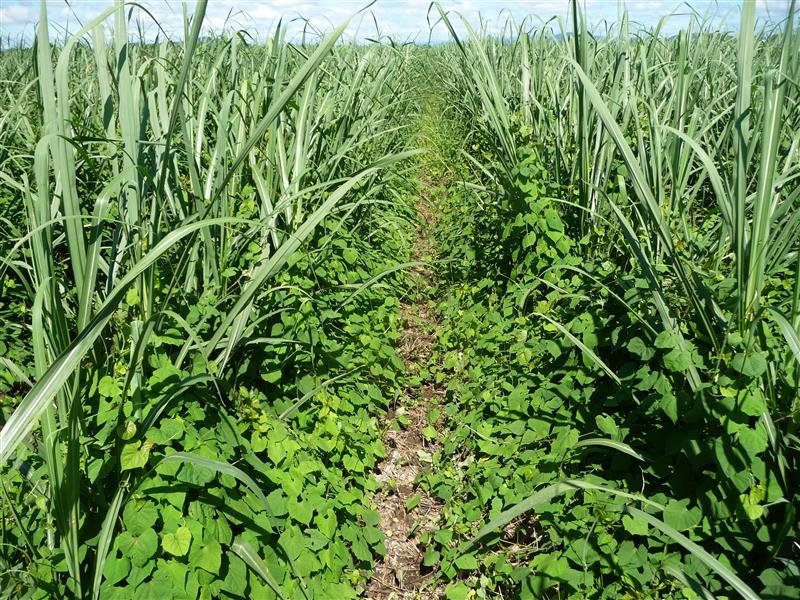
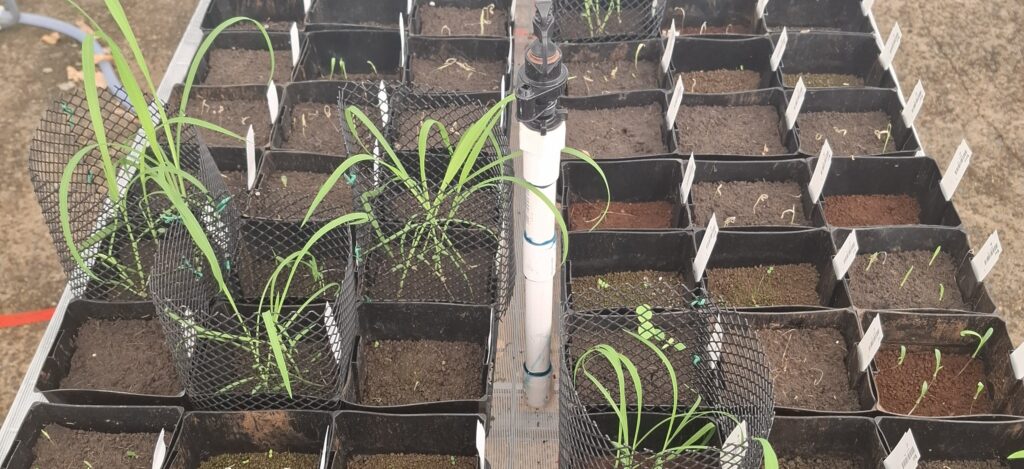
Positive results have already been achieved from pot trials (above) which have compared the efficacy of 14 pre-emergent herbicides currently registered for use in sugarcane when applied over mill mud which was supplied for the trial by Tully Mill.
“The industry relies on mill mud, a sugar mill by-product that is applied to cane paddocks. Mill mud is a very valuable product providing good sugarcane nutrition and growth. However, previous studies have found that mill mud applications can increase weed pressure and herbicides can be lost through runoff,” Ms Fillols said.
“These studies showed that up to 60 per cent of pre-emergent herbicides can run off a paddock where mill mud is used. As a result, mill mud users have often used several knockdown herbicides at a high cost to make up for pre-emergent failures.
“Growers are heavily reliant on herbicides to control weeds because they are the most cost-effective solution. Our aim is to produce an optimised weed management program that will concentrate on herbicides that have proved to be effective in the presence of mill by-products and that will reduce pressure on the environment.
“With most sugarcane growing regions located in Great Barrier Reef catchments, good industry stewardship in using agricultural chemicals such as pre-emergent herbicides is essential to minimise harm to aquatic species. This project seeks to improve water quality through more productive and sustainable applications. It also focuses on improving our understanding of the interaction between mill mud, weeds, herbicides and herbicide mobility in water.
“The weed management guidelines for mill mud users provided at the end of this project will advise on herbicide options, timing of applications and/or application methods.”
The project will use the following methods to identify integrated weed management strategies in sugarcane where mill mud has been applied in the field:
- Screening all registered pre-emergent herbicidal actives in the presence of mill mud.
- Screening mill mud and mill mud-ash from different sources
- Formulating solutions to optimise the use of mill mud with limited loss of herbicide to the environment via run-off
- Comparing the efficacy of pre-emergent herbicides on weed control in the presence of mill by-products in pot trials then in the field
- Measuring the impact of mill by-products on weed emergence, growth and vitality of the crop.
“In our pot trials to date we found that the mill mud can increase the weed biomass of untreated plants by up to 1.9 times, highlighting the importance of an effective pre-emergent herbicide when mill mud is added to the paddock. Mill mud is good for all plant growth, not just sugarcane,” Ms Fillols said.
“We have found that in our controlled conditions where no runoff and leaching occur, pendimethalin and ametryn have reduced efficacy when sprayed over mill mud, compared to being sprayed directly on the soil. The soil type did not make much of a difference.”
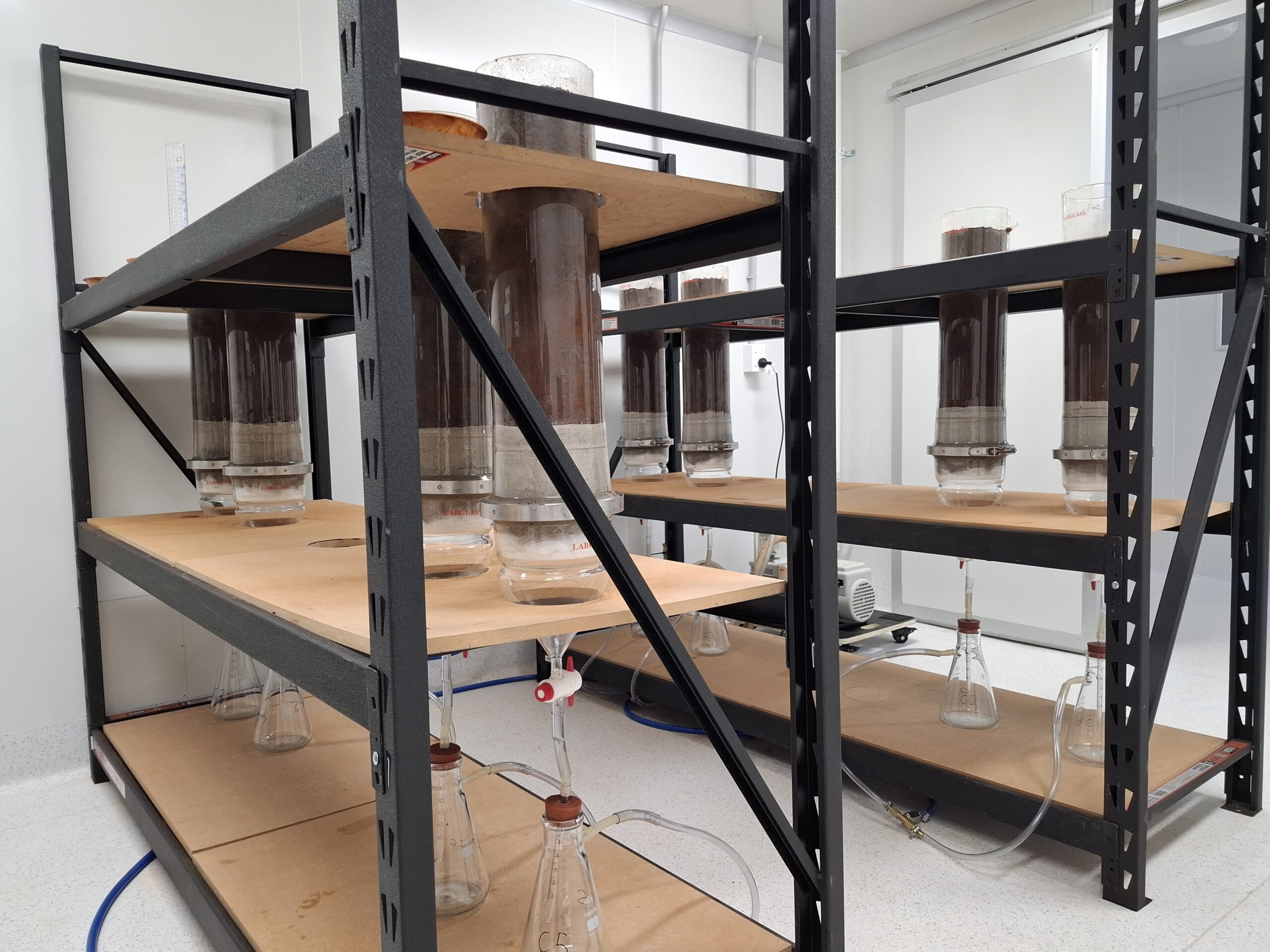
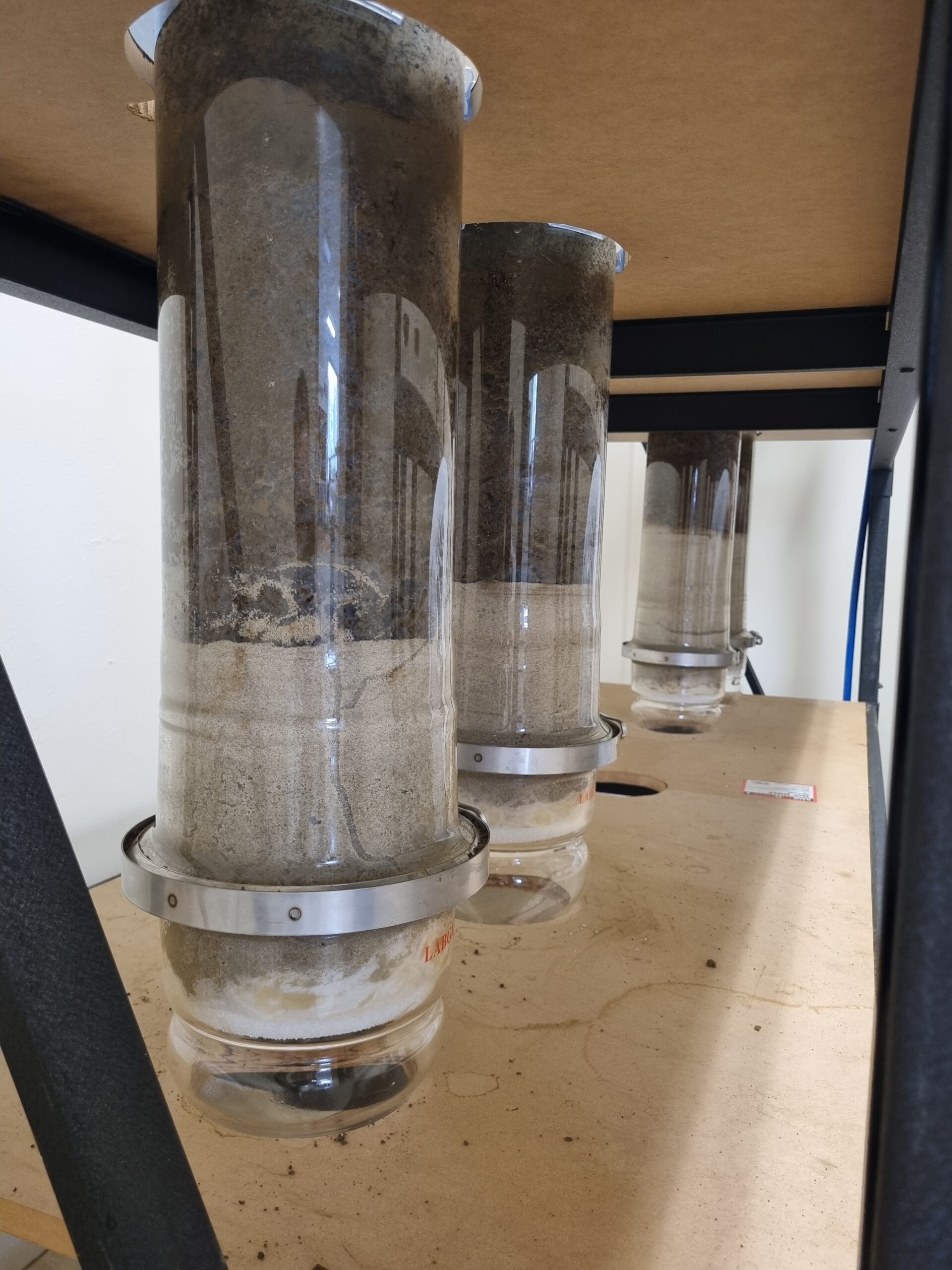
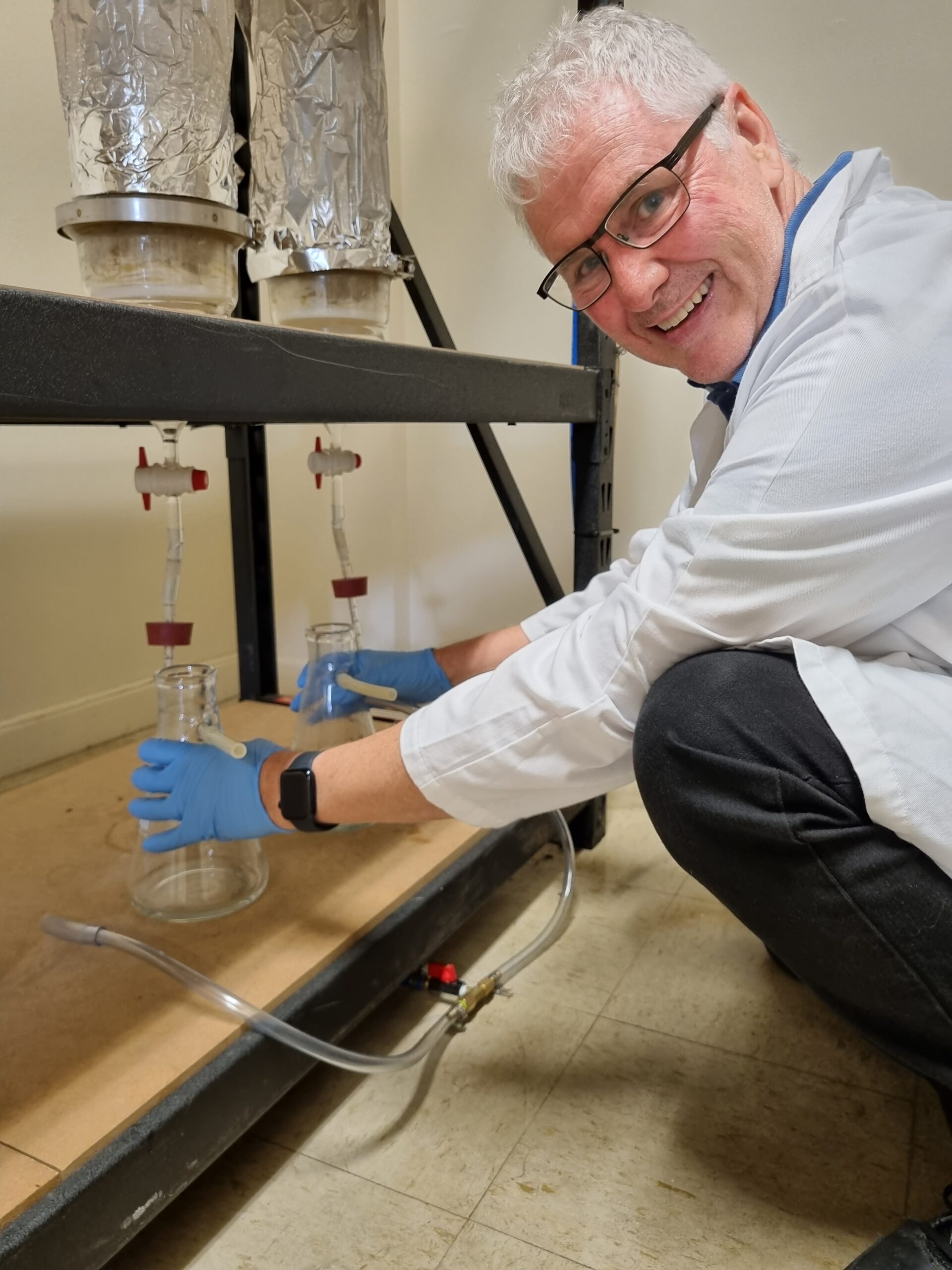
At SRA’s IRIS Laboratories, trials on herbicide mobility are also being carried out to compare the 13 active ingredients registered for pre-emergence control of weeds in sugarcane.
“Leachate samples are still being analysed for their mobility through different types of soil. We need to understand about herbicide mobility both from an environmental but also from an efficacy perspective. When a large portion of herbicide is carried away from the soil into the runoff water, there is not enough herbicide left for weed control,” Emilie Fillols said.
“We are now testing different mill mud sources and mill mud and mill ash mixes for their impact on herbicide efficacy and mobility.”
A program of workshops and demonstrations in several sugarcane districts will provide the outcomes of the project to growers and roll out new application rates, strategies and timings contained in the new guidelines.
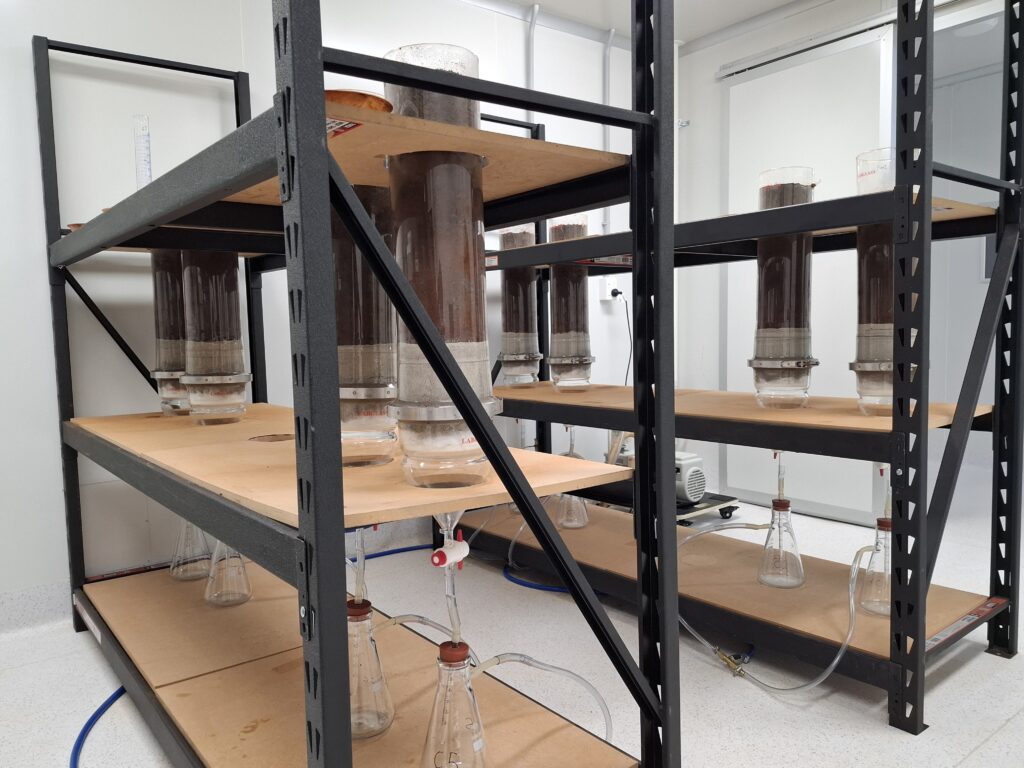
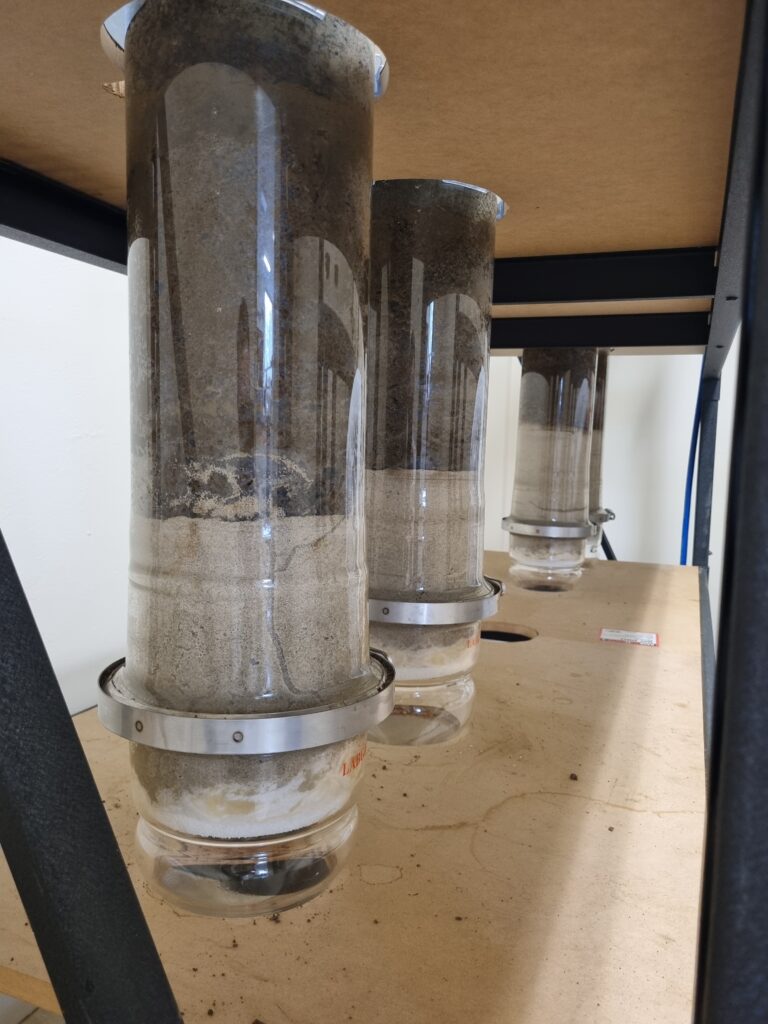
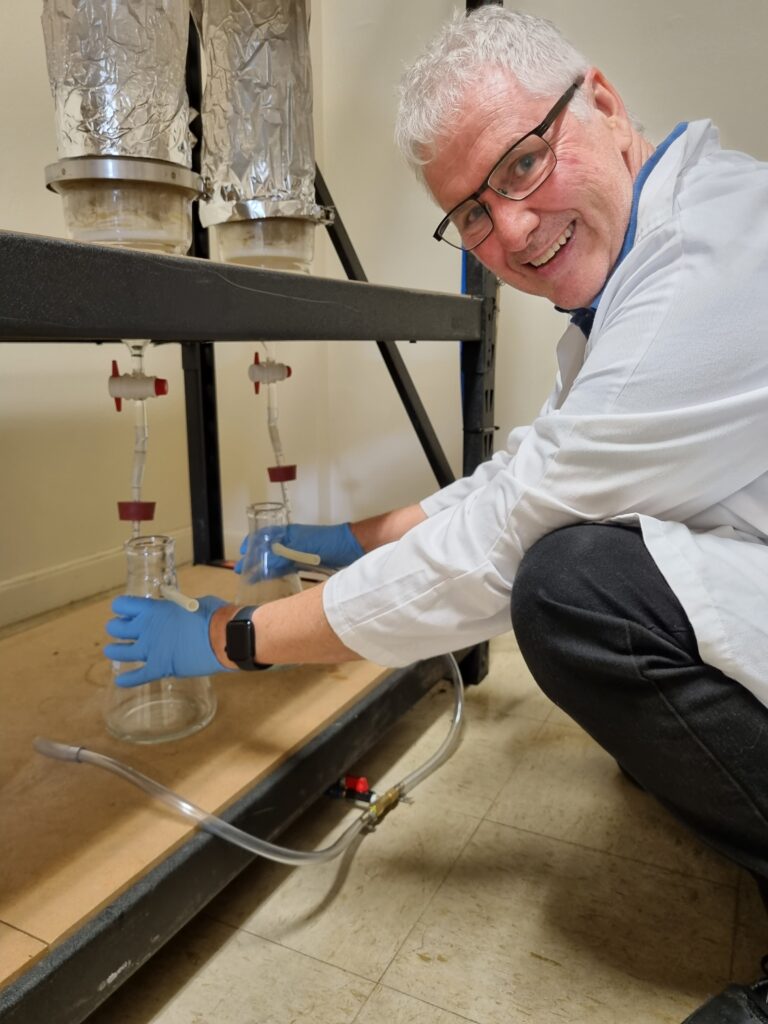
(Above): At IRIS Laboratories, SRA’s NIR Chemist, Andrew Lynch, conducts two mobility trials using leaching columns to compare the 13 active ingredients registered for pre-emergence application in sugarcane on mill mud from three different sources. Leachate samples are currently being analysed. Mill mud and ash mixes will be tested next for their impact on herbicide efficacy and mobility.