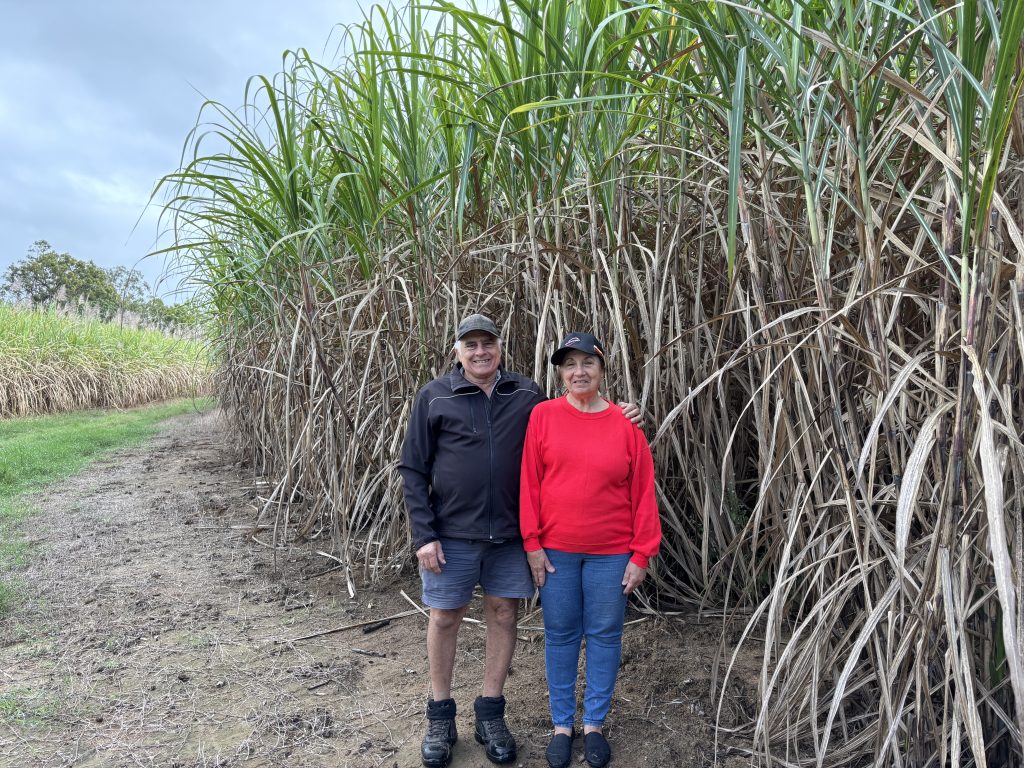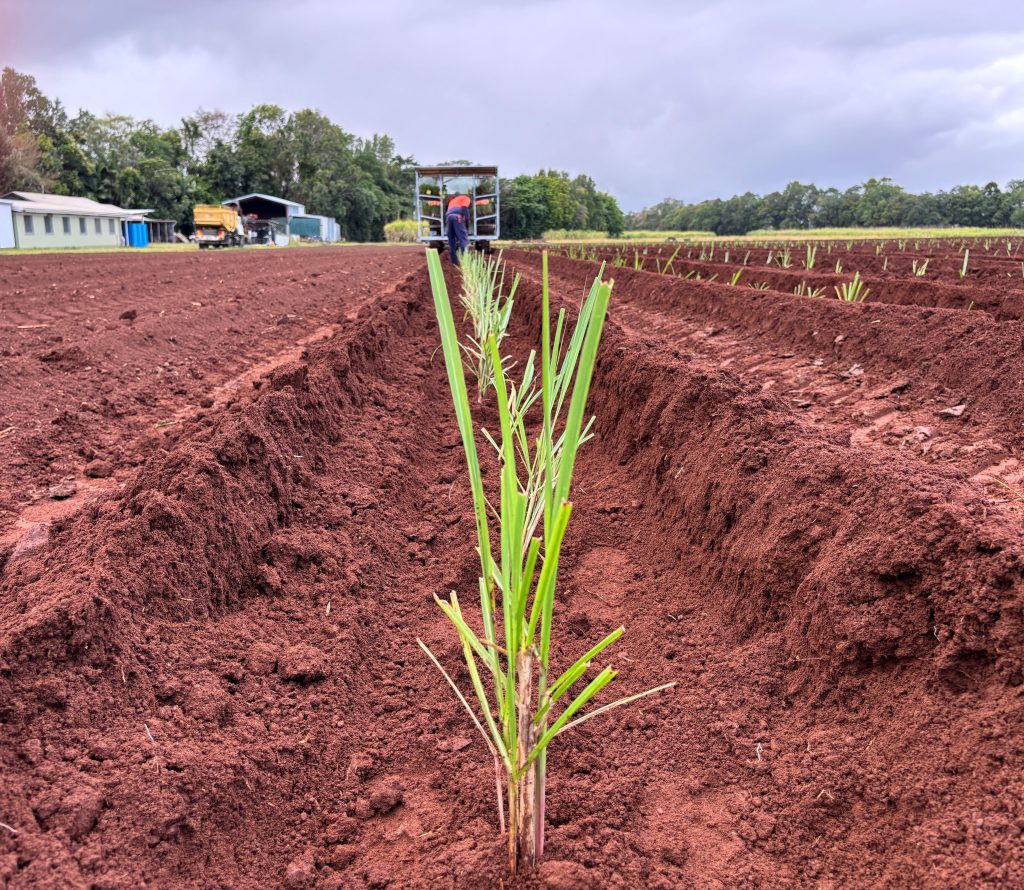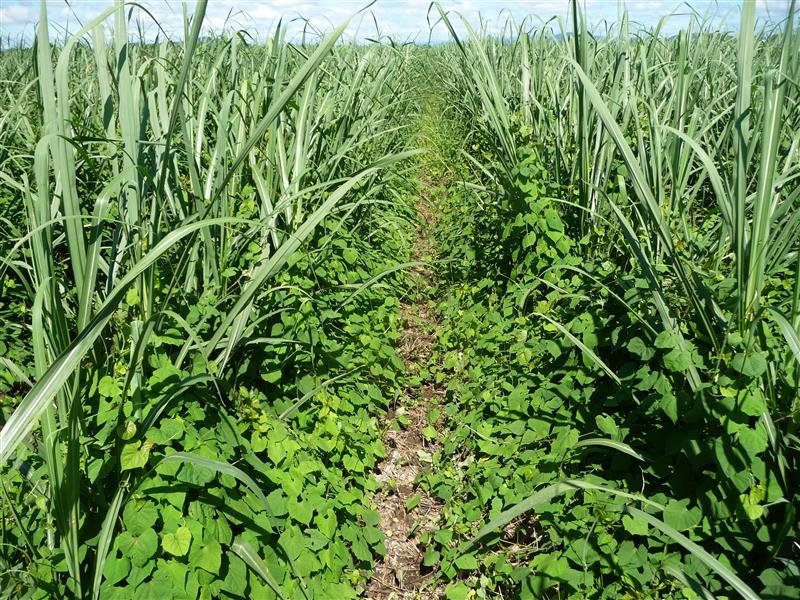
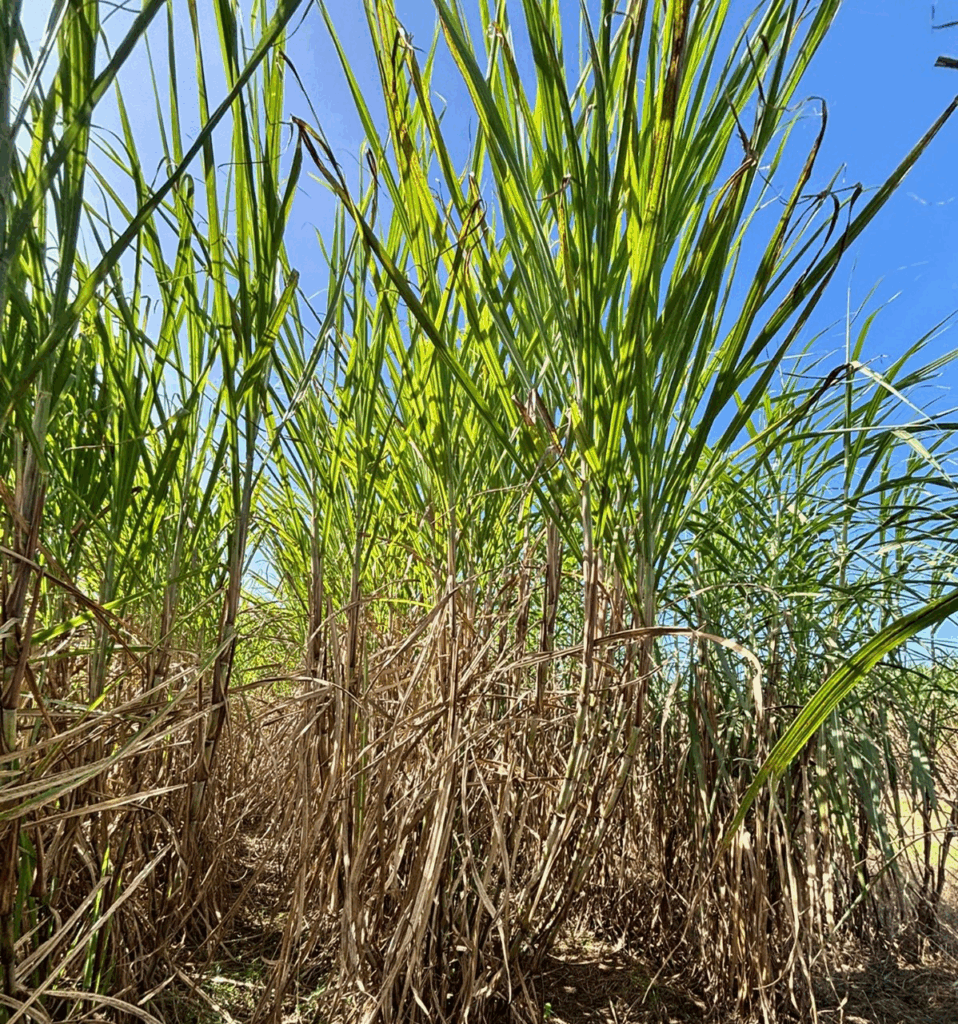
Two new varieties found to have higher yields than standard varieties have been approved for release in 2025 in two districts:
- SRAW46 – Burdekin, and
- SRA48 – Herbert (Table 1) (pictured above.)
“Performance is better than the most commonly grown standards for their respective regions by between 6-7% for tonnes cane per hectare (TCH) and 3 to 13% for tonnes sugar per hectare (TSH),” Variety Development General Manager Garry Rosewarne said.
“Disease resistance profiles are generally sound, although SRA48 currently is rated as susceptible and intermediate to susceptible to Pachymetra.
“Further testing will be undertaken to confirm scores, however, growers should not plant these varieties on soils with high Pachymetra spore counts.”
(Table 1) Variety release summary
| SRA numbers | Variety | Parents | Region |
| SRAW46 | QK14-2492 | Q208 x N29 | Burdekin |
| SRA48 | QN11-372 | Q208 x CP94-1607 | Herbert |
SRAW46 for release in the Burdekin
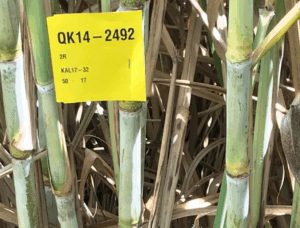
SRAW46 (QK14-2492) has been approved for release by the Regional Variety Committee in the Burdekin in 2025. This clone was selected in early stage trials by Wilmar’s Technical Field Department with the true seed produced and selected by SRA.
In Final Assessment Trials (FAT), it has shown an increase in TCH with a decrease in CCS compared with the average performance of the four standard varieties (KQ228, Q240, Q183 and Q208) (Table 2).
“Similar trends were observed in Burdekin Productivity Services’ strip trials,”said Garry Rosewarne said.
“Q240 currently accounts for nearly 53% of production in the Burdekin and SRAW46 shows a 7% increase in TCH and 6% increase in TSH compared with this variety.
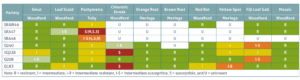
“SRAW46 demonstrates resistance to smut and leaf scald, with a level of Pachymetra resistance comparable to the four standard varieties (Table 3).”
(Table 2): Agronomic performance of SRAW46. Field data was collected from 10 trials over three series that were all grown to second ratoon. Data presented is averaged over the three crops in the series
| BURDEKIN | SRAW46 | KQ228 | Q240 | Q183 | Q208 | %Q240 (53% crop) |
| TCH | 136 | 130 | 127 | 121 | 131 | 107 |
| CCS | 16.6 | 17.2 | 16.7 | 17.1 | 16.9 | 100 |
| TSH | 22.5 | 22.3 | 21.2 | 20.8 | 22.1 | 106 |
(Table 3): Responses of new varieties to a range of diseases in comparison to existing checks
SRA48 for release in the Herbert
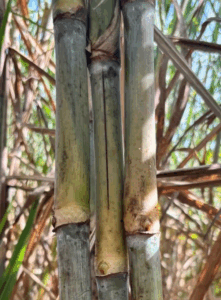
SRA48 (above) shows an improvement in TCH and TSH compared with standard varieties, showing an increase of 6% and 3% respectively higher in these traits over the most commonly grown variety of Q208 (Table 5).
“Data was collected from two series (2017 and 2019) from a combined total of six trials,” Garry said.
“SRA48 generally shows slightly lower CCS than most standards, however, still reaches higher TSH. These yield advantages were consistent across most crop classes and trial locations for the Herbert’s main soils and growing environments.
“SRA48 has a strong disease resistance profile against most of the Herbert’s major diseases, including leaf scald resistance and smut resistance (Table 3).
“Pachymetra was scored as intermediate-susceptible. This is higher than major commercial varieties grown in the Herbert and additional testing will be undertaken to confirm the Pachymetra rating. Growers should avoid planting this variety in areas with a high Pachymetra spore count.
“Limited observations from Herbert trials indicate that SRA48 has low arrowing and light suckering.
“SRA48 is a reliable germinator with an average stalk population and a medium barrel of light green colour. It has medium loose trash and a clean, erect canopy with narrow leaves. it also features an erect, compact stool with an upright growth habit, providing excellent harvesting presentation.”
(Table 4): Agronomic performance of SRA48. Field data was collected from six trials over two series, grown until second ratoon. Data presented is averaged over all crops in the two series.
| Herbert | SRA48 | Q200 | Q208 | Q232 | Q240 | % Q208 (28% of crop) |
| TCH | 94 | 90 | 89 | 95 | 88 | 106 |
| CCS | 16.6 | 17.0 | 17.2 | 16.0 | 17.0 | 96 |
| TSH | 15.6 | 15.2 | 15.2 | 15.2 | 14.9 | 103 |
These varieties are the culmination of more than 10 years of work where SRA scientists and field staff have selected these two winners from more than 100,000 lines that were originally made. Extensive trialing occurred both in the field and glasshouse to give growers the best possible information on how these lines will perform. However, more information will be forthcoming in time as they enter into on-farm observation and regional, high ratoon trials.
They add to the continual incremental gains that the SRA breeding pipeline produces, where three were released in 2024, two in 2023 and a further three in 2022. Recent analysis of released varieties show that the breeding program progresses at 0.8% cumulative increases per year, comparing favourably to wheat where recent evidence indicates that industry produces 0.6% annual yield gains.
SRA47 – provisionally released for the Southern Region
SRA47 is provisionally released for the Southern Region. It shows high TCH and CCS in the data from seven trials over two series planted in 2019 and 2021 (Table 4).
“SRA47 shows a 7% increase in TCH and a 13% increase in TSH above Q240, the most common variety grown in the south (42% of crop),” Garry Rosewarne said.
“Fibre quality readings and quality results suggest no issues for milling.
“SRA47 is resistant to smut, Fiji leaf gall and mosaic, with intermediate resistance to leaf scald. It is susceptible to Pachymetra.
“The individual trial scores for Pachymetra were 9, 5 and 5, giving a weighted score of 6.6, meaning slightly susceptible.
“Additional testing will be undertaken to confirm the rating.”