Four new milling projects have been announced for 2024/25:
Improved energy efficiency without sugar degradation
Project 2024/201: Hybrid pH control strategies to reduce sucrose losses and control corrosion in sugar factory evaporator. Chief investigator: Production Manager, Condong Sugar Mill, Aaron Baker, collaborating with Hakan Bakir and Darryn Rackemann at the Queensland University of Technology (QUT).
Energy efficiency upgrades in sugar mills are typically expensive for processes such as cogeneration. This is where the organic waste from sugarcane milling – bagasse – is used not only to fire the boilers to make steam to run the mill but also to make and feed surplus electricity to the grid as an additional income stream.
To achieve the high level of energy efficiency required, the usual process has been to bleed vapour extensively from the evaporator station to reduce the amount of steam consumed in the factory. However, this change in operation typically leads to the cane juice being exposed to higher temperatures for a longer time period, increasing sucrose degradation levels. It also contributes to the formation of acidic condensates that cause corrosion, and with that the premature failure of piping, valves and fittings.
A previous SRA project, 2017-007, found a strategy where tighter control and optimisation of the pH of sugarcane juice could mitigate this issue.
The aim of the new project is to progress this research and ultimately bring about commercial implementation.
The benefits are estimated to be additional sugar yield worth more than $300,000 per year for a 0.2 percent reduction in degradation (based on a raw sugar price of $450/tonne) and the factory crushing 1.5 million tonnes of cane). Another is a 10 percent reduction in maintenance costs, estimated to be worth more than $50,000 per year.
Demonstrating the superiority of microwave DS transducers
Project 2024/202: Demonstrate the use of a microwave dry substance transducer for controlling high grade boilings. Chief investigator: Senior Technologist Mackay Sugar, Bryan Lavarack, collaborating with Research Fellow, Centre for Agriculture and the Bioeconomy QUT, Dr Gabriel Fraga.
An alternative method for measuring the massecuite concentration (massecuite dry substance) in a pan is being investigated in order to increase automation and cut costs.
Microwave transducers are already used in several refineries and factories overseas and require less manual interaction than when conductivity control is used.
Increased automation is needed by the milling sector because of the high turnover of staff and the difficulty in recruiting suitable operation staff as the number of experienced personnel declines.
In previous research at Farleigh Mill in Mackay, an accurate correlation between a transducer’s DS output and samples measured in the factory was established. This project’s objective is to demonstrate the reliability and accuracy of the microwave DS transducer to control high grade boilings using a pre-defined DS profile under a range of circumstances and changed cane supply conditions during the 2024 season.
Working towards net zero
Project 2024/203: Greenhouse gas emissions from sugar factory boilers. Chief investigator: Wilmar Sugar’s Production & Environment Technologist, Line Jenssen in collaboration with Anthony Mann at QUT.
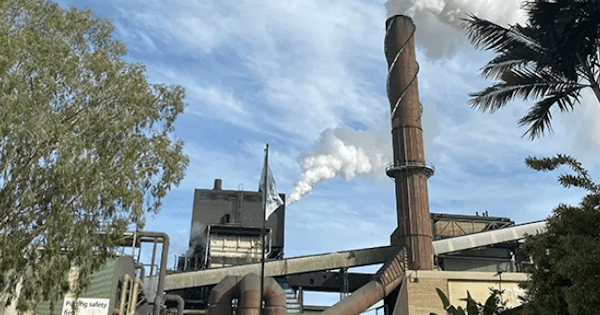
Net Zero is a priority research goal for Australian sugar mills. Two reportable greenhouse gases produced by the industry are nitrous oxide and methane. These are emitted from the boiler stacks during the combustion of bagasse to run the mill.
This project seeks to accurately measure the amount of nitrous oxide and methane being emitted from the various boiler designs used in the mills. The effect of wet scrubbers and various boiler operation (combustion) conditions will also be examined to determine techniques which lessen these emissions.
Converting mill mud into green fertiliser
Project 2024/204: Thermo-digester for rapid conversion of mill mud into green fertiliser. Chief investigator: Plant Ecologist Professor Chengyuan (Stephen) Xu from Charles Darwin University in collaboration with Isis Central Sugar Mill.
Australian sugar mills produce two million tonnes of mill mud a year as a byproduct from processing sugarcane. This is mostly sent to local farmers to provide a soil ameliorant and partial substitute for commercial fertilisers.
Using mill mud for green gardening products such as compost or growing bags is another option. However, conventional composting is slow, typically taking between 90 and 180 days.
This project will look at developing a pilot thermo-digester to validate a faster method of breaking down mill mud into compost and other products. It will involve testing a range of microbial products to reduce the time needed and produce a consistent quality product.
SRA funds projects each year to solve industry-identified issues in sugar milling to benefit both millers and growers. Projects are expected to be completed within 12 months.